

What is Email Marketing (EDM)?
Email marketing is a powerful digital marketing channel that involves sending commercial messages to a group of people via email. In its simplest form, it’s a direct-to-consumer communication strategy, but modern email marketing is far more sophisticated. It’s used for building relationships with potential customers, nurturing leads, driving sales, and building brand loyalty.
Unlike social media, where you rely on an algorithm to show your content, email marketing gives you direct access to your audience’s inbox—a space that a person has willingly given you permission to enter by subscribing. This makes it one of the most effective and high-return digital marketing channels available.
Key Components of an Email Marketing Strategy
A successful email marketing campaign is more than just sending a mass email. It is a strategic process built on several core components:
- List Building (Acquisition):
The foundation of any email marketing strategy is a healthy, engaged email list. This is a database of subscribers who have explicitly opted in to receive communications from you. Common methods for building a list include:- Website pop-ups or sign-up forms offering a discount or a free resource (e.g., an e-book, a checklist, or a guide).
- Lead magnets that provide value in exchange for an email address.
- Collect emails at checkout from e-commerce stores.
- Sign-up sheets at events or in-store.
- Email Service Provider (ESP):
You can’t just send thousands of emails from a regular email client like Outlook or Gmail. An ESP is a software platform (like Mailchimp, Klaviyo, Campaign Monitor, or ActiveCampaign) that helps you manage your subscriber list, design professional emails, automate campaigns, and track performance. An ESP also ensures your emails comply with anti-spam regulations, like Australia’s Spam Act 2003, which requires consent and an unsubscribe option. - Segmentation:
Not all subscribers are the same. Segmentation involves dividing your email list into smaller, targeted groups based on shared characteristics. This could be their purchase history, location, engagement level (e.g., opened the last 5 emails), or interests. Sending targeted content to each segment drastically increases relevance and engagement. - Automation (Email Journeys/Workflows):
Automation allows you to send triggered emails based on a user’s actions. This is where email marketing becomes incredibly powerful. Examples of automated email workflows include:- A welcome email series for new subscribers.
- An abandoned cart reminder to a customer who didn’t complete a purchase.
- A post-purchase follow-up email with product care tips.
- A re-engagement campaign to win back inactive subscribers.
- Email Content and Design:
Your email needs to be visually appealing, mobile-friendly, and contain compelling content.- Content: This could be a promotional offer, a new blog post announcement, a company update, or a personalised recommendation. The content should always provide value to the recipient.
- Design: Use a clean, professional template. Your email should be easy to read and have a clear Call to Action (CTA), such as a “Shop Now” button or a “Read More” link.
- Analytics and Reporting:
The true power of email marketing lies in its measurability. ESPs provide detailed analytics on key metrics:- Open Rate: The percentage of people who open your email.
- Click-Through Rate (CTR): The percentage of people who click a link in your email.
- Conversion Rate: The percentage of people who complete a desired action, like making a purchase.
- Bounce Rate: Emails that couldn’t be delivered.
- Unsubscribe Rate: The percentage of people who opt out of your list. By analysing these metrics, you can refine your strategy, improve your content, and maximise your return on investment. In an age of algorithm-driven social media, email marketing offers a direct, personal, and highly effective way to build lasting customer relationships and drive business growth.

How Effective is Email Marketing?
In the world of digital marketing, where new advertising channels constantly emerge, a crucial question often arises: how effective is email marketing in the current climate? Despite its perceived “traditional” status compared to more recent innovations, email marketing remains an extraordinarily potent and foundational tool for businesses.
Its enduring effectiveness stems from its unique ability to foster direct, personalised communication, consistently delivering a remarkable return on investment (ROI) when executed strategically.
The Enduring Power of Email Marketing
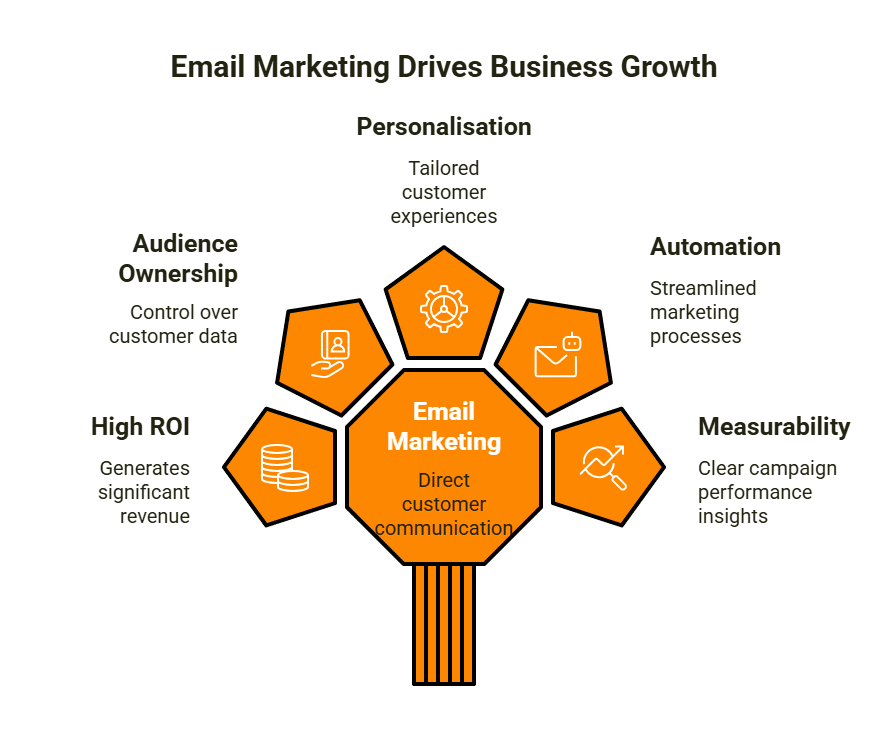
Email marketing’s powerful efficacy is underpinned by several compelling advantages:
- Exceptional Return on Investment (ROI): Email consistently ranks as one of the highest ROI marketing channels. Studies frequently cite figures ranging from AUD$30 to AUD$40 generated for every AUD$1 spent. This efficiency arises from its low execution cost and high conversion potential.
- Direct Communication Channel: An email lands directly in a subscriber’s inbox. This provides an unmediated line of communication with an audience that has actively opted in, signalling genuine interest in your brand.
- Audience Ownership: Crucially, you own your email list. Access to your audience is not reliant on the whims of platform algorithm changes, policy updates, or potential discontinuation, making it a significant strategic asset.
- Personalisation and Segmentation: Modern email platforms allow for highly sophisticated personalisation. Messages can be tailored based on subscriber demographics, purchase history, browsing behaviour, or engagement levels. This relevance significantly boosts open rates, click-through rates, and conversions.
- Automation Capabilities: Email excels through automation. Welcome series, abandoned cart reminders, post-purchase follow-ups, and lead nurturing sequences can all be automated, providing timely, relevant communication with minimal manual effort.
- Robust Measurability: Email campaigns offer clear measurability. Key metrics like open rates, click-through rates (CTR), conversion rates, and unsubscribe rates provide actionable insights into performance, allowing for continuous optimisation.
- Versatility: Email serves diverse purposes: driving sales, nurturing leads, distributing content (blogs, whitepapers), making announcements, providing customer service, and building loyalty.
Factors Influencing Effectiveness
While email marketing is powerful, its true effectiveness depends heavily on execution quality:
- List Quality: A clean, engaged, and genuinely opted-in subscriber list is paramount. Purchased or unengaged lists lead to poor deliverability and low ROI.
- Content Relevance and Value: Every email must offer value—be it a useful tip, exclusive offer, or engaging content. Irrelevant or overly promotional emails inevitably lead to unsubscribes.
- Subject Lines and Preheaders: These are critical for encouraging opens. They must be compelling, clear, and avoid spam triggers.
- Call to Action (CTA): Emails need a clear, singular, and compelling CTA that guides the reader to the next desired step.
- Mobile Optimisation: With most emails opened on mobile devices, responsive design is non-negotiable for readability and user experience.
- Frequency and Timing: Striking the right balance is key. Too many emails cause fatigue; too few can lead to being forgotten.
- Deliverability: Ensuring emails bypass spam filters requires a good sender reputation, proper authentication (SPF, DKIM, DMARC), and consistently relevant content.
The Strategic Imperative of Email
Far from being an outdated channel, email marketing remains an incredibly effective and strategic pillar in the digital marketing mix. Its unique ability to offer direct, owned, measurable, and highly personalised communication consistently delivers exceptional ROI. For businesses in Australia, a well-executed email marketing strategy is not just supplementary; it is often the core engine for cultivating customer relationships, driving conversions, and ensuring sustainable business growth.

What is Open Rate?
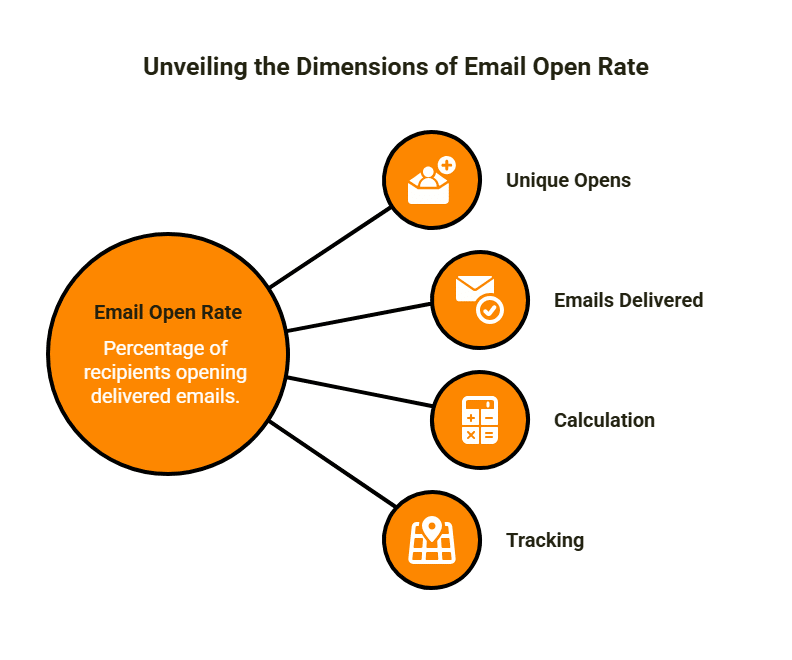
When monitoring email marketing, among the myriad metrics used to gauge campaign performance, the Open Rate stands out as a fundamental indicator. Simply put, it measures the percentage of recipients who opened your email out of those to whom it was successfully delivered.
While it doesn’t tell the whole story of an email’s success, a strong Open Rate is the critical first step towards achieving any conversion goal, signifying that your message successfully grabbed attention in a crowded inbox.
How is Open Rate Calculated?
The calculation for Open Rate is straightforward:
Open Rate = (Number of Unique Opens / Number of Emails Delivered) x 100%
It’s crucial to understand the components:
- Unique Opens: This refers to the number of individual subscribers who opened your email at least once. If a single subscriber opens the same email multiple times, it only counts as one unique open. This provides a more accurate picture of reach.
- Emails Delivered: This figure excludes any “bounced” emails (those that failed to reach the recipient’s inbox due to invalid addresses or temporary issues). It represents the true number of emails that had the potential to be opened.
Email service providers (ESPs) track opens by embedding a tiny, invisible 1×1 pixel image within the email. When the recipient’s email client downloads this image, it registers an “open.”
Why is Open Rate Important?
Despite recent changes to its accuracy (discussed below), Open Rate remains a vital metric for several reasons:
- First Impression Indicator: It’s the most direct measure of how compelling your subject line and preheader text are. A high Open Rate suggests your initial message successfully enticed recipients to learn more.
- List Health Assessment: Consistently high open rates indicate an engaged and healthy subscriber list. Conversely, declining rates can signal disengagement, a need for list cleaning, or even deliverability issues.
- Deliverability Insights: Low open rates can sometimes be an early warning sign that your emails are landing in spam folders or facing other deliverability challenges, impacting your sender reputation.
- Segmentation Effectiveness: By comparing Open Rates across different segments of your audience, you can assess whether your personalisation and segmentation efforts are truly resonating.
- A/B Testing Foundation: Open Rate is a key metric for A/B testing elements like subject lines, sender names, and send times, providing clear data on what your audience responds to.
- Prerequisite for Conversions: An email must first be opened for any further action (like clicking a link or making a purchase) to occur. It’s the gateway metric.
Factors Influencing Open Rate
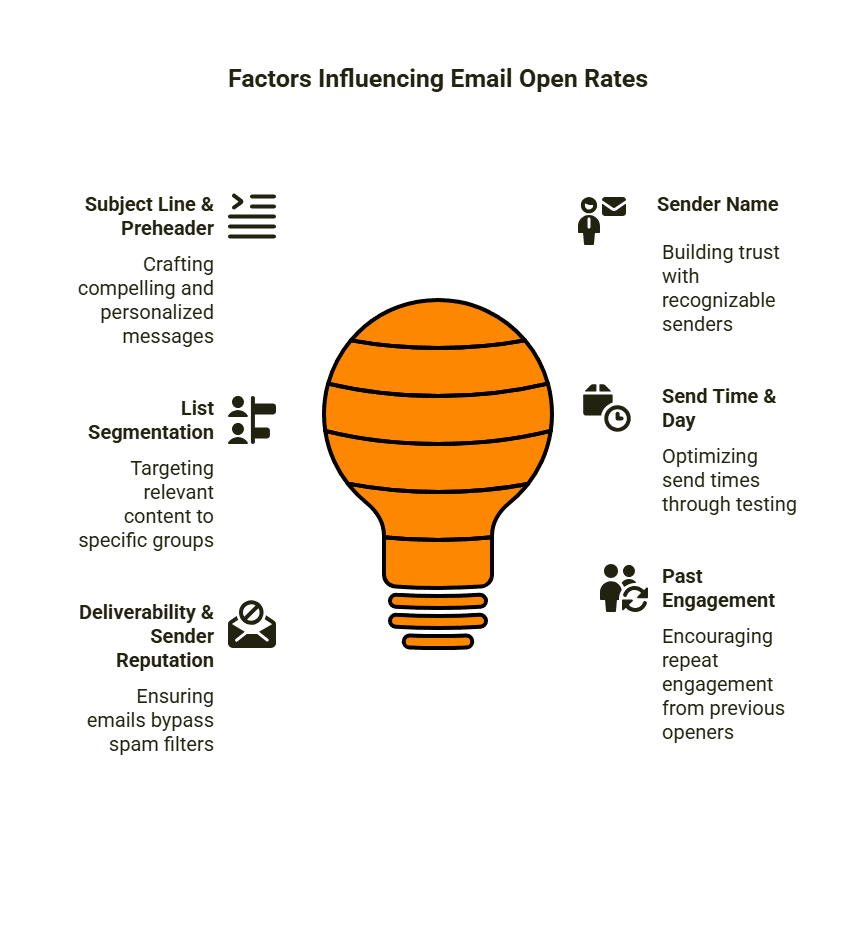
Several elements significantly impact whether your emails are opened:
- Subject Line & Preheader: These are paramount. They need to be concise, compelling, relevant, and often personalised to stand out.
- Sender Name: Recipients are more likely to open emails from a recognisable and trusted sender.
- List Segmentation: Sending relevant content to segmented groups dramatically increases the likelihood of an open.
- Send Time & Day: Optimal send times vary by audience, industry, and region. Testing is crucial.
- Deliverability & Sender Reputation: A strong sender reputation helps bypass spam filters.
- Past Engagement: Users who have previously opened and engaged with your emails are more likely to do so again.
Limitations and Modern Considerations
The accuracy of Open Rate has been notably impacted by Apple Mail Privacy Protection (MPP), introduced in late 2021. MPP essentially “pre-fetches” email content, meaning the tracking pixel may fire automatically, regardless of whether the user actually viewed the email. This can artificially inflate reported Open Rates, particularly for audiences heavily using Apple Mail.
As a result, email marketers are increasingly shifting their primary focus to more reliable engagement metrics like Click-Through Rate (CTR), conversion rates, and return on investment (ROI), as these directly measure user action and value derived.
Despite the challenges to its precise measurement, Open Rate remains a vital initial indicator in email marketing. It provides essential insights into the effectiveness of your inbox presentation and the overall health of your subscriber list. While modern analytics demand a broader view of engagement metrics, understanding and striving for a strong Open Rate is still the fundamental first step towards successful email campaigns that drive tangible business outcomes.
What Are Bounced Emails?
When implementing an email marketing strategy, achieving successful message delivery is paramount. However, not every email sent reaches its intended recipient. When an email fails to be delivered, it is referred to as a “bounced email.”
Bounces are undeliverable messages returned to the sender, indicating a problem with the recipient’s email address or server. Understanding bounced emails, their types, and their implications is crucial for maintaining a healthy subscriber list, ensuring high deliverability, and ultimately, optimising email campaign effectiveness.
Types of Bounced Emails
Bounced emails are generally categorised into two main types:
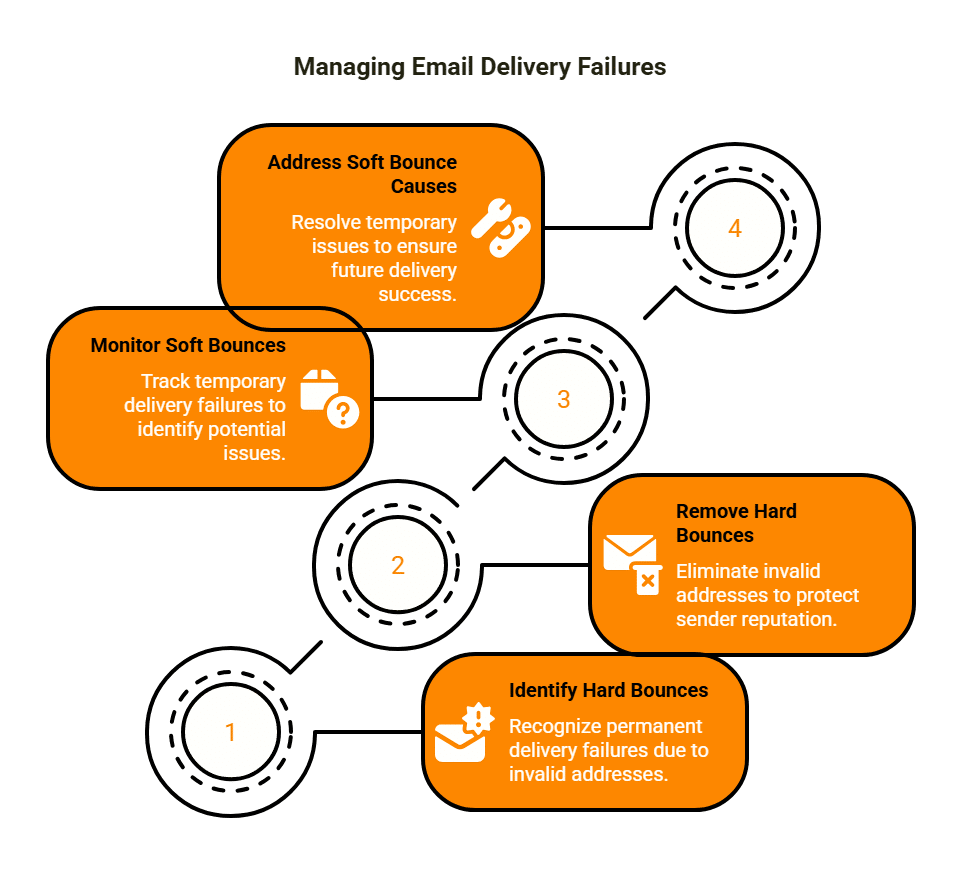
Hard Bounces: These represent permanent delivery failures. A hard bounce indicates an email address is invalid, non-existent, or permanently blocked. The message will never be delivered to that address.
- Common Causes: Typos (e.g., user@gmai.com), non-existent addresses (e.g., recipient left a company), or the recipient’s server permanently blocking delivery.
- Impact: Highly detrimental to sender reputation. High rates signal poor list quality or spamming, leading to emails being flagged or blocked. It is imperative to remove hard-bounced addresses from your mailing list immediately.
Soft Bounces: These indicate temporary delivery failures. The email address might be valid, but the message could not be delivered at that specific moment due to a temporary issue. Most Email Service Providers (ESPs) will automatically retry sending the email several times.
- Common Causes: Recipient’s mailbox being full, recipient’s server temporarily unavailable, email message being too large, or a temporary issue with the sender’s server.
- Impact: Less severe than hard bounces, but persistent soft bounces from the same address can signal an underlying problem and may eventually be treated as a hard bounce. Monitoring consistent soft bounces is important.
Why Bounced Emails Matter
A high bounce rate is not merely an inconvenience; it can severely undermine your email marketing efforts:
- Damaged Sender Reputation: Internet Service Providers (ISPs) use bounce rates to assess trustworthiness. A high rate signals sending to invalid addresses, negatively impacting your sender score and increasing the likelihood of legitimate emails landing in spam folders.
- Reduced Deliverability: A poor sender reputation directly translates to lower deliverability rates. Even valid email addresses on your list may not receive your messages, significantly reducing campaign reach.
- Wasted Resources: Sending emails to consistently bouncing addresses wastes bandwidth, processing power, and potentially financial resources if paying based on email volume.
- Inaccurate Campaign Metrics: High bounce rates skew analytics. Open and click-through rates will appear lower than they truly are for engaged subscribers, making accurate performance assessment difficult.
Managing and Preventing Bounced Emails
Proactive management of bounced emails is fundamental to maintaining a healthy and effective email list:
- Regular List Cleaning: Periodically review and remove hard-bounced addresses. Many ESPs automate this, but monitoring is good practice.
- Implement Double Opt-in: Require new subscribers to confirm their email address before adding them to your list. This verifies the address and genuine interest.
- Utilise Email Validation Services: Tools that verify email addresses at the point of collection or before a large send can significantly reduce initial bounce rates.
- Monitor Deliverability Metrics: Regularly check bounce rates, spam complaint rates, and inbox placement to identify issues early.
- Sender Authentication: Properly set up SPF, DKIM, and DMARC records to verify your sending domain’s authenticity, helping ISPs trust your emails.
- Segment and Engage: Regularly engage with your subscribers. Consider re-engagement campaigns for inactive segments or removing them.
Bounced emails are more than just delivery failures; they are critical indicators of list health and sender reputation. Proactively identifying, understanding, and managing bounces is essential for ensuring your messages reach their intended audience, thereby maximising the impact and ROI of your email marketing efforts.

What is Lead Generation?
A main reason to conduct modern marketing campaigns is lead generation and it stands as a fundamental objective for most businesses. It involves attracting and converting strangers into individuals who have expressed interest in a company’s product or service.
Specifically in email marketing, lead generation is the strategic act of collecting email addresses from prospective customers, building a valuable database for direct and personalised communication. This process is about initiating a relationship, guiding potential customers through the sales funnel.
What Defines an Email Marketing Lead?
Within email marketing, a “lead” is an individual who has proactively shown interest and willingly provided their contact information. This consent is crucial, signifying permission to communicate and leading to higher quality engagement. A genuine, opted-in lead with relevant interest is significantly more valuable than unsolicited contacts.
Why Email Marketing Excels in Lead Generation
Email remains an exceptionally powerful channel for lead generation due to inherent strengths:
- Direct and Owned Communication: Unlike algorithm-dependent channels, email offers direct, unmediated communication. You own your subscriber list, a stable asset independent of platform changes.
- Permission-Based Engagement: Opt-in subscribers indicate pre-existing interest, leading to higher engagement and receptiveness.
- Personalisation Potential: Email allows sophisticated personalisation. Messages can be tailored based on lead acquisition source, interests, or behaviour, dramatically increasing relevance.
- Nurturing Capabilities: Email excels at lead nurturing. Automated campaigns deliver content, build trust, and guide leads towards purchase.
- Cost-Effectiveness: Cost per lead through email marketing is generally lower than many other channels, offering excellent ROI.
- Comprehensive Measurability: Every aspect can be tracked, from sign-up source to nurture engagement and ultimate conversion.

Key Strategies for Email Lead Generation
Effective email lead generation employs various proven strategies:
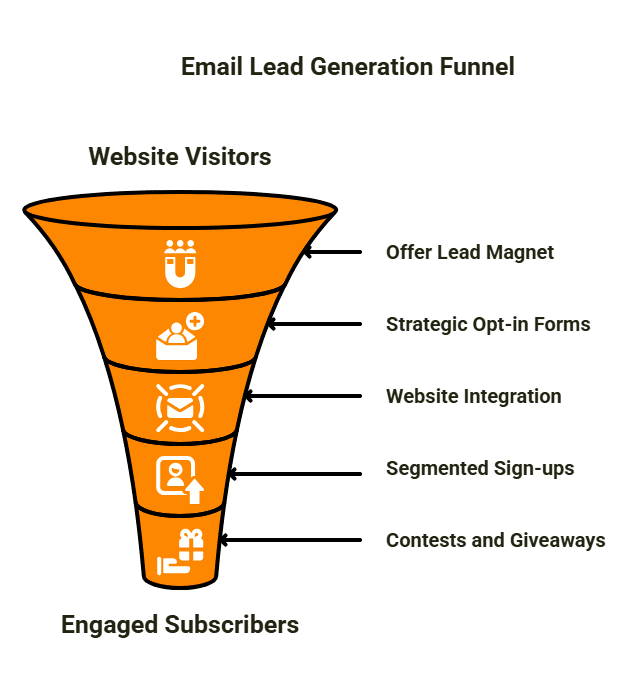
- Lead Magnets (Content Upgrades): Offer valuable content (e.g., e-books, webinars, templates, discounts) free in exchange for an email address. They must be highly relevant and valuable to your audience.
- Strategic Opt-in Forms: Integrate clean, user-friendly forms on your website (embedded, pop-ups, landing pages) with clear, compelling calls to action (CTAs). Ensure a quick, frictionless user experience.
- Website Integration: Design your site to seamlessly direct visitors towards email capture points, often promoting relevant lead magnets.
- Segmented Sign-ups: Offer distinct sign-up options based on interest areas, allowing subscribers to self-segment for tailored content.
- Contests and Giveaways: Effective for list growth, but ensure the prize aligns with your business to attract genuinely interested leads.
- Offline Lead Capture: Utilise opportunities at physical events, in-store, or via direct mail, always with clear consent.
Nurturing and Measuring Success
Once leads are acquired, focus shifts to nurturing and measurement. Lead scoring prioritises promising leads based on engagement. Automated nurture sequences then deliver targeted content. Success is measured by new subscriber growth, lead magnet conversion rates, Cost Per Lead (CPL), and critically, how many leads ultimately become paying customers.
Email as a Foundational Strategy
Email marketing serves as a cornerstone of effective lead generation. It’s a powerful channel for building customer relationships, delivering personalised value, and systematically guiding them from initial interest to loyal patronage. By investing in robust email lead generation, businesses secure a direct, invaluable asset for long-term engagement and sustainable growth.
What Are the Best Tools to Use?
Successful email marketing transcends basic message sending. To cultivate engaged subscriber lists, deliver personalised content, and precisely measure return on investment, businesses require a sophisticated ecosystem of specialised tools.
The quest for the “best” tool isn’t about finding a singular solution, but rather assembling the optimal combination that aligns seamlessly with your unique objectives, scale, budget, and technical capabilities.
Foundational Email Service Providers (ESPs)
At the core of any robust email marketing strategy sits the Email Service Provider (ESP). These platforms are the operational backbone, managing lists, facilitating email creation, handling dispatches, powering automation, and providing essential analytics. They scale from accessible options for nascent businesses to comprehensive enterprise-grade solutions.
- Mailchimp: A popular choice for start ups and small to medium businesses due to its intuitive interface, generous free tier, and strong template editor, offering solid segmentation and basic automation.
- HubSpot: A powerful all-in-one platform for growing and large organisations, integrating email marketing with CRM, sales, and content management for advanced automation capabilities.
- ActiveCampaign: Highly regarded for its exceptional marketing automation and integrated CRM. It’s ideal for businesses requiring complex, multi-stage nurture sequences and deep personalisation in customer journeys.
- Campaign Monitor: Favoured by agencies and design-conscious brands for its strong emphasis on email design, intuitive drag-and-drop builder, and effective segmentation tools.
- Klaviyo: Specifically engineered for e-commerce, offering profound integrations with platforms like Shopify. It excels in sophisticated abandoned cart recovery, intelligent product recommendations, and hyper-segmented e-commerce flows.

Lead Generation & List Cultivation Tools
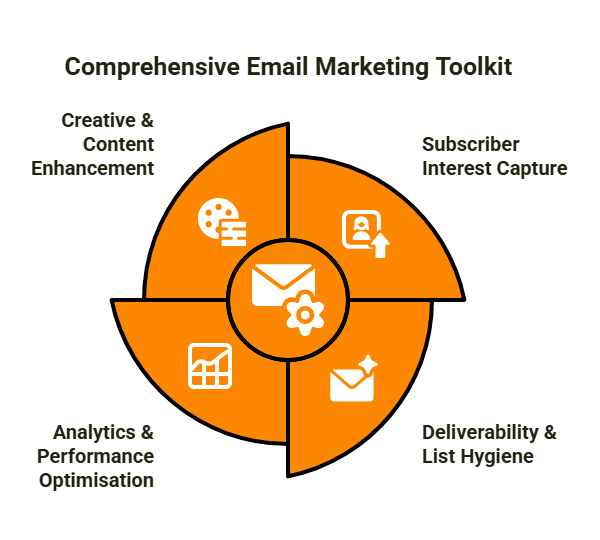
The initial step in email marketing is capturing subscriber interest. Dedicated tools simplify the creation of compelling opt-in opportunities for website visitors.
- OptinMonster / Sumo: Widely used for crafting high-converting website pop-ups, slide-ins, and other lead capture forms, boasting extensive customisation, A/B testing, and targeting options.
- Unbounce / Leadpages: While many ESPs offer basic builders, these platforms specialise in creating highly optimised, conversion-focused landing pages designed for specific campaigns and lead magnets.
Deliverability & List Hygiene Solutions
Maintaining a pristine and deliverable email list is paramount for preserving sender reputation and ensuring inbox placement.
- ZeroBounce / NeverBounce: These services verify email addresses in real-time or via bulk upload, pinpointing invalid, risky, or spam trap addresses before they impact your deliverability metrics.
- MxToolbox: Provides essential tools for checking domain health, scrutinising blocklist status, and verifying correct configuration of email authentication records (SPF, DKIM, DMARC) to enhance trust.
Analytics & Performance Optimisation Tools
Gauging campaign performance is fundamental for continuous improvement and strategic refinement.
- Google Analytics: Crucial for tracking website traffic originating from email campaigns and accurately measuring on-site conversions, using UTM parameters for precise attribution.
- ESPs’ Built-in Analytics: All reputable ESPs furnish comprehensive dashboards detailing key metrics like open rates, click-through rates, conversion rates, and engagement trends.
- Heatmap & Session Recording (e.g., Hotjar): These offer invaluable insights into how users interact with your landing pages after clicking through from an email, enabling optimisation of the post-click experience.
Creative & Content Enhancement Tools
Crafting visually appealing and compelling email content is vital for capturing and sustaining recipient engagement.
- Canva: An accessible design platform for producing stunning email headers, graphics for lead magnets, or promotional visuals, requiring no advanced design skills.
- Stock Photo Libraries (e.g., Unsplash, Pexels): Offer a vast selection of high-quality imagery to elevate email aesthetics.
- Grammarly: An indispensable aid for refining email copy, ensuring professional, grammatically correct, and error-free communication.
Strategic Tool Selection
Ultimately, the “best” tools are those that most effectively serve your specific business needs. When choosing, consider:
- Features vs. Requirements: Avoid over-investing in unused functionalities.
- Scalability: Can the tool seamlessly grow with your business’s expanding list and evolving complexity?
- Integration: How well does it connect with your existing CRM, e-commerce platform, or other marketing software?
- Budget: Align tool costs with your overall marketing expenditure.
- Ease of Use & Support: Prioritise intuitive interfaces and dependable customer support, especially if technical resources are limited.
By diligently evaluating these factors, businesses can assemble a powerful suite of email marketing tools that effectively drive engagement, generate leads, and foster lasting customer relationships.
What is Writing in the Third Person?
In the nuanced world of email marketing, narrative perspective significantly influences message reception. Writing in the third person presents information from an external, objective viewpoint, focusing on the subject rather than the sender or recipient.
It employs pronouns like “he,” “she,” “it,” “they,” or proper nouns (e.g., company, brand, product names). For instance, an email might state, “The company has launched a new product,” instead of, “We’ve launched a new product.”
Hallmarks of Third-Person Email Writing
The essence of third-person writing is its detachment and impartiality:
- Pronoun Usage: Relies on “he, she, it, they” and specific nouns (e.g., “Acme Corp.”, “The new software suite”).
- Objective Tone: Language is factual and formal, avoiding personal opinions or conversational elements.
- Subject Focus: The narrative centres on the entity, event, or offering discussed, not sender-receiver interaction.
Strategic Advantages of Third Person in Email Marketing
While less common for direct consumer engagement, third person offers distinct benefits in specific email marketing contexts:
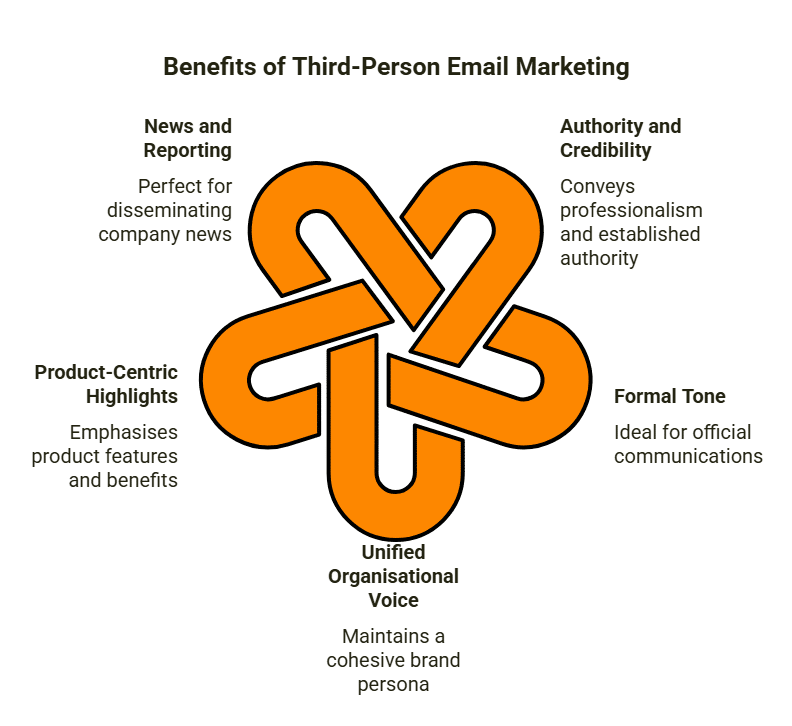
- Authority and Credibility: Conveys professionalism and established authority. Highly effective for corporate announcements, industry research, or thought leadership where factual weight is paramount.
- Formal Tone: Ideal for official communications like legal updates, policy changes, or formal partnership announcements, ensuring messages are perceived as serious and authoritative.
- Unified Organisational Voice: For large corporations with multiple content contributors, a consistent third-person voice helps maintain a cohesive, singular brand persona across all communications.
- Product-Centric Highlights: Effectively showcases a product or service as an independent entity, emphasising its features and inherent benefits rather than solely what the company provides or customer experiences.
- News and Reporting: Perfect for disseminating company news, press releases, or industry insights where objective information delivery to stakeholders is the primary goal.
Limitations and When to Exercise Caution
Despite its strengths, the third-person perspective has significant drawbacks making it unsuitable for many email marketing objectives:
- Lacks Personal Connection: Can feel distant or impersonal, undermining efforts to build strong customer relationships in a typically personal channel.
- Reduced Engagement: Less direct and conversational, potentially leading to lower recipient engagement as messages may not feel directly relevant.
- Ineffective for Nurturing and Sales: Less effective for nurturing leads, fostering empathy, or driving direct sales conversions, where an intimate, persuasive, second-person tone typically performs better.
- Not Ideal for Consumer Brands: For D2C brands, e-commerce promotions, or any communication aiming for a relatable brand image, a third-person approach can feel stiff and uninviting.
Strategic Application
Third-person writing in email marketing is a deliberate strategic choice, best reserved for communications demanding formality, objectivity, or a clear subject focus from an authoritative standpoint. It must be carefully balanced with your audience’s expectations and overall campaign goals. While seldom the default for relationship building or direct sales, it remains an indispensable tool for official announcements, news dissemination, and establishing a professional, credible brand image when appropriate.
What is Writing in the First Person?
When deciding which “voice” to use when implementing email marketing, the voice you choose profoundly shapes a message’s connection with its recipient. Writing in the first person means your communication originates directly from the sender’s perspective, using pronouns like “I,” “we,” “me,” and “us.”
This approach allows a brand or an individual to speak personally to the audience, fostering an immediate, intimate, and conversational tone. It transforms a mass dispatch into a direct dialogue, making the recipient feel genuinely addressed.
Hallmarks of First-Person Email Writing
The defining characteristics of first-person writing lend themselves to a distinct style of engagement:
- Direct Pronouns: Consistent use of “I” or “we” immediately establishes the sender’s identity and voice.
- Personal Tone: Language often mirrors natural speech, creating a friendly, approachable atmosphere.
- Sender-Centric Focus: Content conveys thoughts, insights, or offers as if coming directly from a person or cohesive team within the brand.
Strategic Advantages of First Person
Adopting a first-person perspective in email marketing offers compelling benefits, particularly for building robust customer relationships:
- Builds Rapport and Trust: Directly humanises the brand, making it relatable and trustworthy. This personal touch fosters genuine connections.
- Conveys Authenticity: A first-person voice delivers transparency, sharing stories and experiences that resonate deeply with consumers seeking genuine interaction.
- Enhances Engagement: A conversational tone encourages dialogue, making emails less like broadcasts and more like personal messages, often increasing open and click-through rates.
- Fosters Emotional Connection: Easier to evoke empathy, share brand narratives, or build community around shared values when communication feels direct.
- Showcases Brand Personality: An excellent vehicle for your brand’s unique voice, humour, or distinct character to shine through, helping you stand out.
- Ideal for Relationship Building: Highly effective for nurturing leads, onboarding customers, loyalty programmes, and direct sales where personal touch and trust are paramount.

When to Employ First Person
First-person writing proves highly effective in various email marketing scenarios:
- Welcome & Onboarding: Establishes a warm, personal connection with new subscribers.
- Messages from Leadership: Newsletters or updates from a founder or CEO add a human face to the brand.
- Personalised Offers: Tailored recommendations or special offers feel more genuine.
- Brand Storytelling: Sharing the brand’s journey, values, or behind-the-scenes insights directly.
- Customer Service: Direct communication regarding support tickets or order updates.
- Feedback Requests: Encouraging responses feels more natural when asked personally.
- Consumer Promotions: For e-commerce and direct sales, a personal, persuasive tone often drives better conversion.
Limitations and Considerations
Despite its power, the first-person perspective isn’t universally suitable:
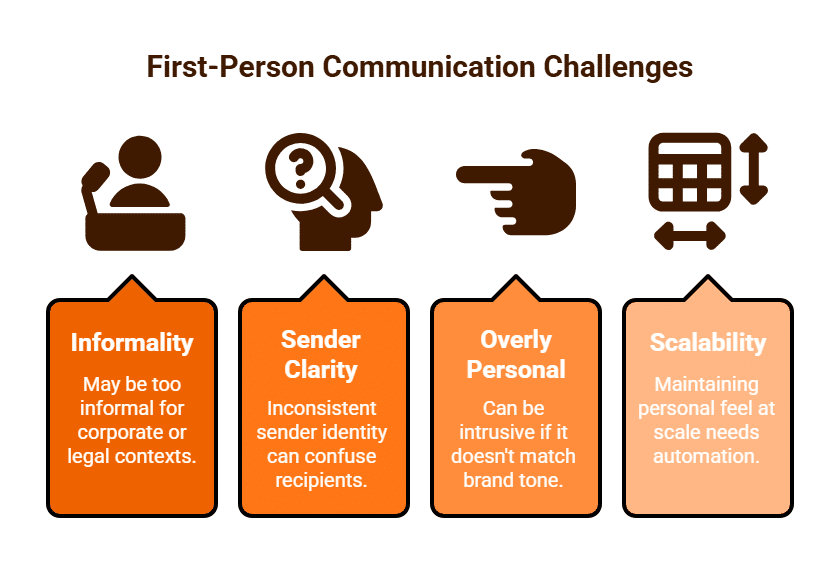
- Potential for Informality: Can be too informal for highly corporate announcements or legal notices where objectivity is required.
- Sender Clarity: If the sender’s identity isn’t consistent, “I” or “we” might confuse recipients.
- Overly Personal: Could be perceived as intrusive if the brand tone doesn’t align.
- Scalability Challenges: Maintaining a genuinely personal feel at massive scale requires sophisticated segmentation and automation.
Strategic Application
First-person writing in email marketing is a potent strategic choice, particularly effective for building authentic relationships, fostering trust, and infusing brand personality. It excels at nurturing leads and cultivating customer loyalty. While judiciously applied, it remains a cornerstone for brands aiming for deeper, more meaningful engagement and strong long-term customer value.
How Often Should We Send Marketing Emails?
For businesses leveraging email marketing, a pivotal and often debated question revolves around sending frequency: how often should marketing emails be dispatched? Striking the right balance is crucial.
Sending too many emails risks overwhelming subscribers, leading to increased unsubscribes and plummeting engagement. Conversely, dispatching too few can result in your brand being forgotten amidst a cluttered inbox. There’s no universal “magic number”; instead, the ideal frequency is a dynamic sweet spot unique to each business, its audience, and its objectives.
Finding the “Sweet Spot”: Value Over Volume
Optimising email frequency primarily aims to maximise subscriber engagement and conversion rates without inducing fatigue. This fundamentally means prioritising value over volume. Every email sent should offer a clear benefit or compelling reason for the recipient to open and act, whether it’s exclusive content, a valuable insight, a relevant offer, or a helpful update.
Key Factors Influencing Sending Frequency
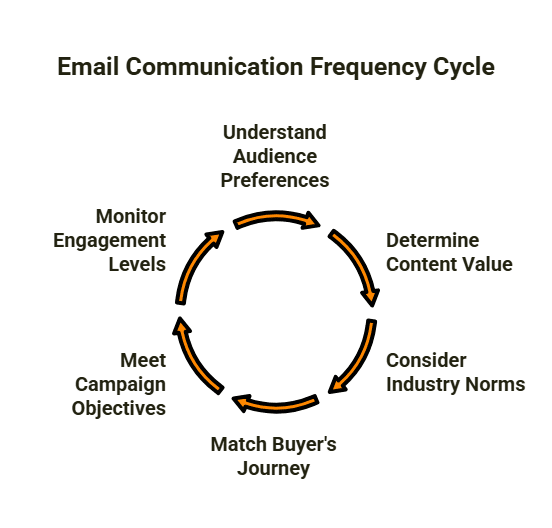
Several critical factors dictate how often you should communicate with your audience via email:
- Audience Preference: Paramount. Different segments tolerate varying email volumes. B2B audiences might prefer less frequent, in-depth content, while some consumer segments accept more.
- Content Type and Value: The nature of your content impacts permissible frequency. Daily news digests or exclusive webinar series might allow higher frequency than purely promotional emails.
- Industry and Business Model: E-commerce with daily deals might send several times a week. B2B service providers might find weekly or bi-weekly newsletters more appropriate.
- Buyer’s Journey Stage: New leads in a nurture sequence might receive more frequent, educational emails. Loyal customers might receive fewer, highly personalised offers.
- Campaign Objectives: A short-term flash sale might justify a temporary increase in frequency, but this should remain an exception.
- Audience Engagement Levels: Highly engaged segments can tolerate higher frequency. Disengaged segments might require reduced frequency or re-engagement campaigns.
Signs of Sending Too Frequently (Fatigue Indicators)
Vigilantly monitoring your email metrics will reveal tell-tale signs of subscriber fatigue:
- Rising Unsubscribe Rates: The most obvious and critical indicator of recipients feeling overwhelmed.
- Declining Open Rates: Subscribers are losing interest in your messages.
- Decreased Click-Through Rates (CTR): Content or offers aren’t resonating, even if opened.
- Increased Spam Complaints: Recipients are actively marking your emails as unwanted, severely damaging sender reputation.
- Lower Deliverability: ISPs may start filtering your emails to spam if consistent disengagement or complaints are detected.
Strategies for Optimising Frequency
To find and maintain your optimal sending cadence, implement these strategies:
- Segment Your Audience: Tailor frequency to different segments based on preferences, behaviour, or lead score.
- Offer Preference Centres: Allow subscribers to choose their preferred email frequency (e.g., daily, weekly, monthly digests) or content types.
- A/B Test Sending Schedules: Experiment with different days, times, and frequencies for various segments, meticulously tracking metrics.
- Prioritise Value-Driven Content: Ensure every email provides genuine value, making recipients want to open it.
- Monitor Core Metrics Religiously: Continuously track open rates, click-through rates, unsubscribes, and conversions. Adapt your strategy based on this real-time data.
- Implement Re-engagement Campaigns: For inactive subscribers, attempt re-engagement. If unresponsive, consider reducing frequency or removing them from your active list.

Continual Optimisation for Growth
The decision of how often to send marketing emails is an ongoing optimisation process driven by data and audience feedback, not a static rule. The ultimate objective is to be consistently relevant, not merely consistently present. By diligently tracking key metrics and adapting your strategy, you can cultivate an engaged subscriber base that actively converts, contributing significantly to your business’s sustained growth.
What if I’m Not a Good Writer?
For many, the idea of engaging in email marketing can feel incredibly daunting, particularly if you don’t naturally consider yourself a “good writer.” This is a common, yet often misplaced, concern.
The truth is, effective email marketing isn’t about literary genius or crafting poetic prose; it’s fundamentally about clear, strategic communication that genuinely resonates with your audience and prompts a desired action. The encouraging news? Writing compelling emails is a learnable skill, significantly enhanced by embracing core principles, leveraging modern tools, and focusing on measurable outcomes rather than innate talent.
The Core of Impactful Email Copy
Firstly, shift your perspective. Email marketing success thrives on clarity, not complexity. Your readers are busy, so your copy must be:
- Crystal Clear: Easily understood at a glance. Eliminate jargon, overly complex sentences, and any ambiguity.
- Audience-Centric: Write directly to your specific audience. What are their pain points, interests, and motivations? Tailor your language and message precisely.
- Objective-Driven: Every email needs a single, unmistakable goal – a click, a purchase, a download, or a sign-up. Your writing should meticulously guide the reader towards that specific action.
- Value-Focused: Always articulate the direct benefit to the recipient. Why should they care? What tangible advantage or solution does your message offer them?

Actionable Steps & Tools to Elevate Your Writing
Even without natural wordsmithing prowess, numerous practical strategies and digital tools can dramatically elevate your email copy:
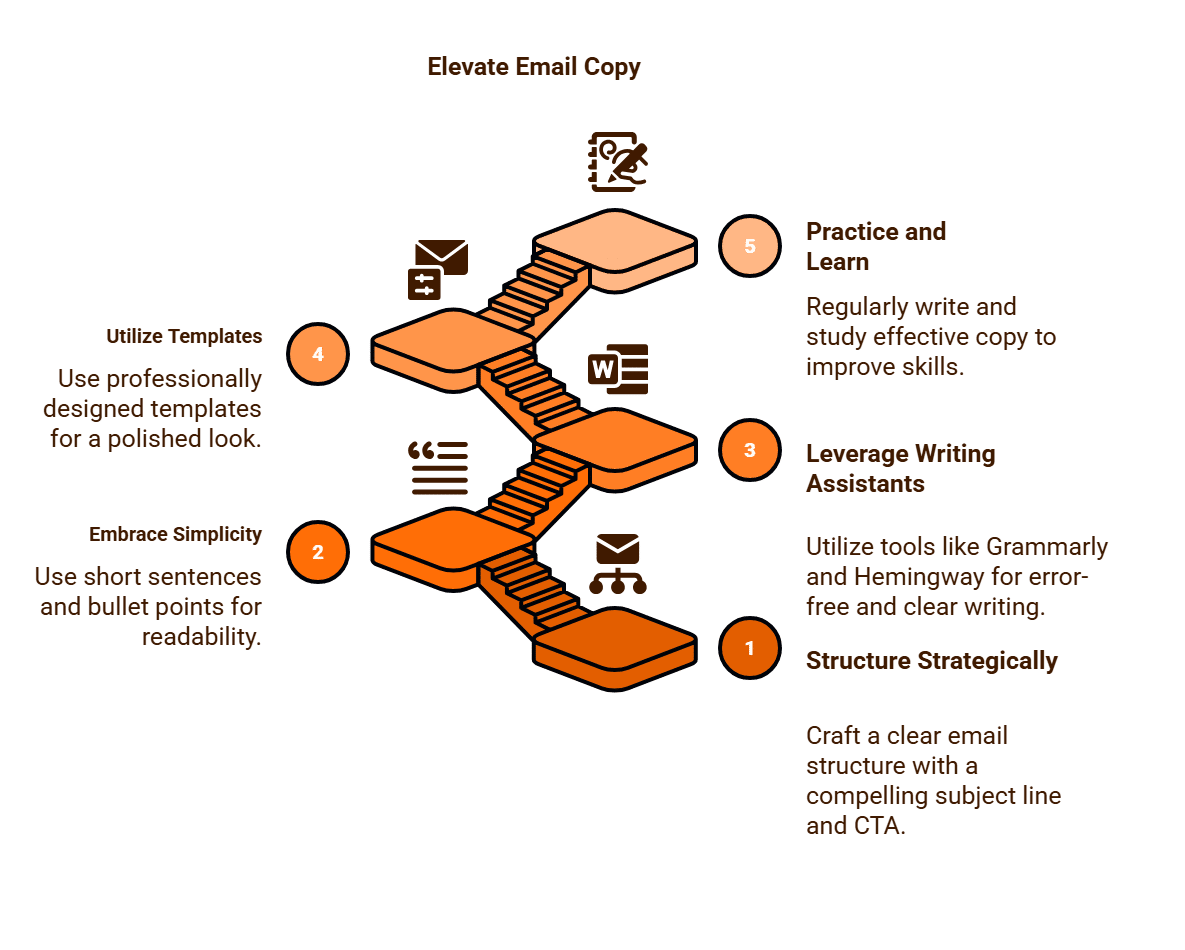
- Structure Strategically: A well-structured email is inherently easier to write and consume. Begin with a compelling subject line and preheader text to capture attention. Follow with a clear hook, a concise body delivering value, a singular, strong Call to Action (CTA), and a simple closing.
- Embrace Simplicity: Prioritise short sentences and concise paragraphs. Utilise line breaks, bullet points, and subheadings to break up dense text, vastly improving readability.
- Leverage Intelligent Writing Assistants:
- Grammarly: Indispensable for catching grammatical errors, spelling mistakes, and punctuation flaws. It also offers valuable style suggestions.
- Hemingway Editor: Helps simplify complex prose, highlights passive voice, and identifies overly dense passages, encouraging stronger, clearer writing.
- AI Writing Tools (e.g., Gemini): These powerful assistants can aid in brainstorming subject lines, drafting initial paragraphs, rephrasing existing text for clarity, and adjusting tone. Crucial Caution: Always review and rigorously edit AI-generated content to ensure it perfectly aligns with your brand voice and accuracy standards.
- Utilise Templates and “Swipe Files”: Most Email Service Providers (ESPs) offer professionally designed templates that provide excellent structural frameworks. Furthermore, curate a “swipe file” – a collection of effective emails from other brands. Analyse their winning elements and adapt them to your own campaigns.
- Practice and Continuous Learning: Writing is a skill that flourishes with consistent effort. Write regularly, actively read examples of effective marketing copy, and consider online courses on copywriting fundamentals.
Test, Learn, and Continuously Refine
Ultimately, the true measure of your email copy’s effectiveness lies in its performance. Don’t hesitate to:
- A/B Test: Experiment with different subject lines, body copy variations, or CTAs. Let the data unequivocally tell you what resonates most powerfully with your audience.
- Seek Feedback: Ask trusted colleagues or loyal customers to review your emails before dispatch.
- Monitor Metrics: Your open rates, click-through rates, and conversion rates are the ultimate judges of your writing’s impact. Use this data to continually refine your approach.
Being an “effective writer” in email marketing isn’t predicated on innate literary talent; it’s about mastering clear, strategic communication. With dedication, the right tools, and a commitment to data-driven refinement, anyone can craft emails that achieve tangible business results.
How Much Content Should We Put in Marketing Emails?
Striking the right balance for email content is a perpetual challenge for marketers: how much information should we include in our emails? It’s not about simply filling space; rather, it’s a delicate art between providing sufficient detail and respecting the recipient’s finite attention span.
Effective email content isn’t judged by its word count, but by its ability to deliver strategic value concisely, prompting the desired action without overwhelming the reader.
The Core Principle: Value and Objective
Every marketing email you dispatch must have a singular, clear purpose. Are you aiming for a direct sale, encouraging a website click, educating, or nurturing a lead? The content volume should precisely support that core objective. The overarching principle is the value-to-time ratio; how much benefit does the reader gain for the time they invest? For initial engagement or direct sales, less content is almost always more.
Key Factors Influencing Content Volume
Several critical factors should guide your decision on email content length:
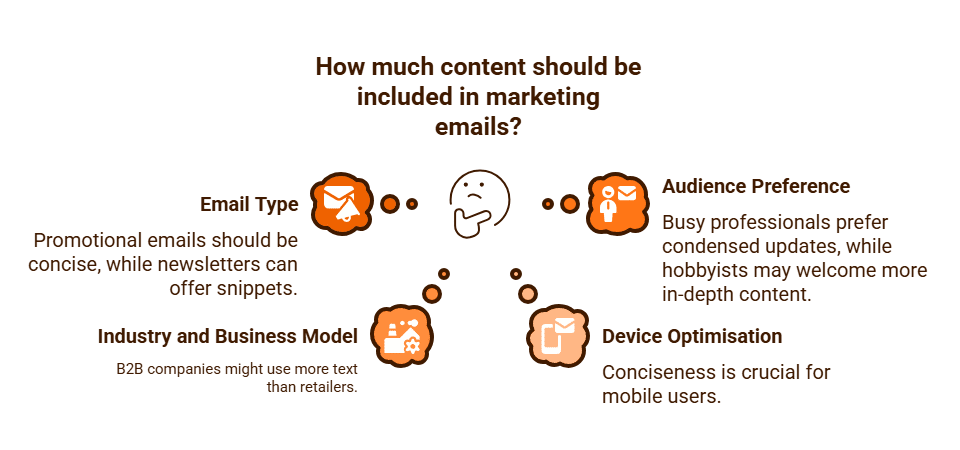
- Email Type and Purpose: Promotional emails are concise; newsletters offer snippets linking out. Nurture emails are medium length, while transactional ones are brief and specific. Welcome series start longer, then become more focused.
- Audience Preference: Different segments have varying attention spans. Busy professionals prefer condensed updates, while hobbyists might welcome more in-depth content. Monitoring engagement is key.
- Industry and Business Model: B2B companies summarising whitepapers might use more text than a retailer announcing a new collection. Your offering’s nature dictates density.
- Device Optimisation: Most emails are opened on mobile. Long, dense paragraphs or excessive scrolling are major deterrents on smaller screens, making conciseness paramount.
Signs You’re Including Too Much Content
Vigilantly monitoring your email campaign metrics can reveal if your content volume is problematic:
- Low Click-Through Rates (CTR): Your core message or CTA might be buried.
- High Scroll Rates with Low Click Rates: Users are scrolling past without engaging links.
- Increased Unsubscribe Rates: Overwhelmed or bored subscribers are opting out.
- Low Conversion Rates: Message lost in noise.
- Increased Spam Complaints: Overly long or unfocused emails can be perceived as less valuable.
Strategies for Optimal Content Volume
To find and maintain your optimal content length, employ these strategies:
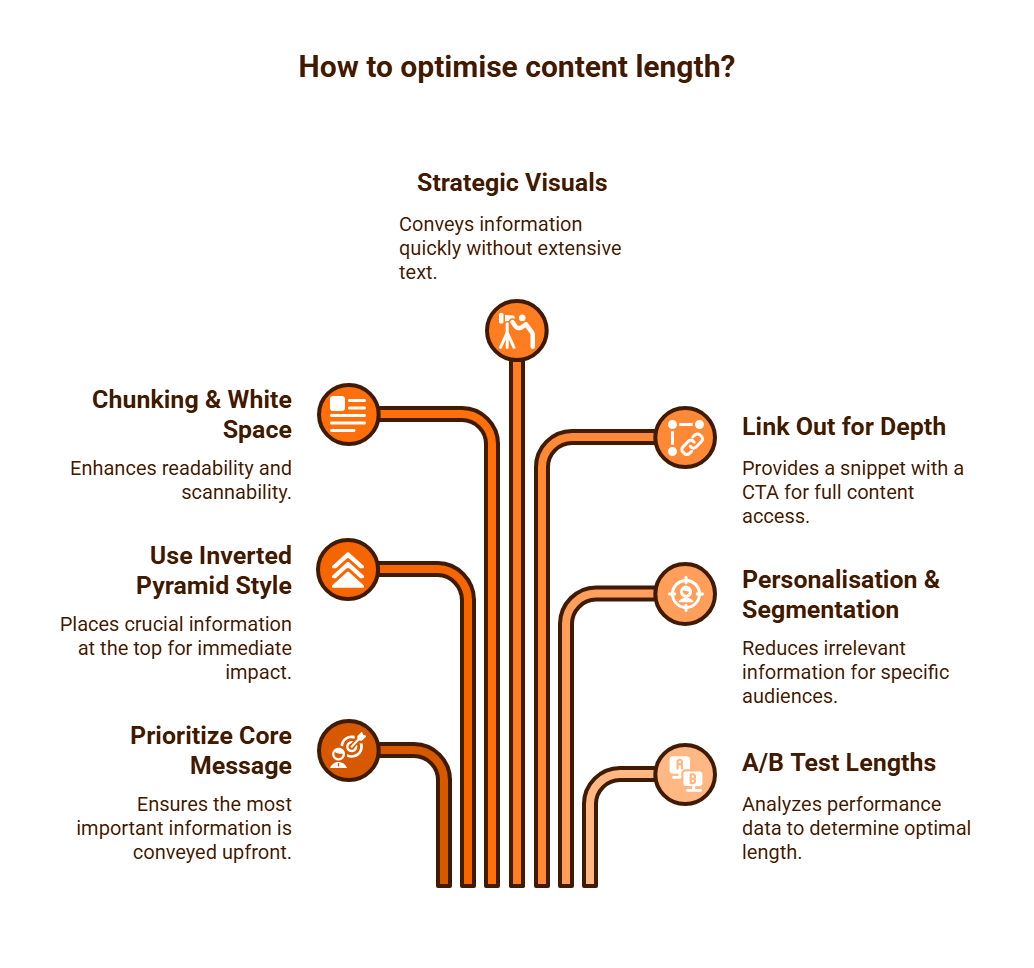
- Prioritise the Core Message: What’s the single most important takeaway or action? Convey that upfront.
- “Inverted Pyramid” Style: Place the most crucial information at the top, followed by supporting details, then less essential context.
- Chunking & White Space: Use short paragraphs, bullet points, numbered lists, and ample white space for fast scanning.
- Strategic Visuals: Images, GIFs, or short videos convey information quickly without extensive text.
- Link Out for Depth: For extensive content (e.g., a blog post), provide a compelling snippet in the email and a clear CTA to read the full version on your website.
- Personalisation & Segmentation: Tailoring content to specific segments reduces irrelevant information, making even longer emails feel more manageable.
- A/B Test Lengths: Experiment with shorter versus longer versions for different objectives and audiences, analysing performance data.
Driving Effectiveness Through Precision
The decision of how much content to include in marketing emails is an ongoing optimisation process driven by data and audience feedback. The ultimate objective is to be consistently relevant, not merely consistently present. By diligently tracking key metrics and adapting your strategy, you can cultivate an engaged subscriber base that actively converts, contributing significantly to your business’s sustained growth.
What is Drip Feed Email Marketing?
Automating communication to guide prospective and existing customers through their journeys is a cornerstone of effective digital strategy. In email marketing, this powerful technique is known as drip feed email marketing (or “drip campaigns” / “automated email sequences”).
It involves sending a pre-written series of emails automatically, triggered by user actions or predefined timeframes, designed to nurture relationships, guide prospects, or onboard customers efficiently.
How Drip Feed Campaigns Operate
Drip campaigns function autonomously, managed by an Email Service Provider (ESP). The process begins with a trigger – a user action like signing up, downloading content, abandoning a cart, or making a first purchase.
This trigger initiates a sequence of pre-written emails, dispatched at scheduled intervals (e.g., 24 hours after signup, 3 days later). Each sequence has a specific goal, whether it’s converting a lead or onboarding a customer. Once configured, the system runs automatically, ensuring timely, relevant communication without manual intervention.
Why Drip Campaigns Are Exceptionally Effective
Drip feed email marketing offers compelling benefits that significantly enhance overall marketing efficacy:
- Lead Nurturing & Conversion: Guides prospects with consistent, valuable content, building trust and moving them towards purchase.
- Personalisation & Relevance: Triggered by specific actions, emails are highly relevant to the recipient’s immediate context, boosting engagement.
- Automation & Efficiency: Once configured, campaigns run automatically, saving considerable time and resources.
- Consistent Brand Presence: Delivers timely messages, keeping your brand top-of-mind.
- Scalability: Effortlessly manages thousands of leads or customers simultaneously.
- Measurability & Optimisation: Performance metrics for each email and the entire sequence can be meticulously tracked, allowing for continuous refinement.

Common Applications of Drip Feed Campaigns
Drip campaigns are highly versatile, tailoring messages for various objectives:
- Welcome Series: Introduces new subscribers, setting expectations and guiding initial engagement.
- Onboarding Sequences: For new customers, providing guidance on product features and success tips.
- Abandoned Cart Series: Reminds users about unpurchased items, often with incentives.
- Lead Nurturing Series: Delivers educational content to prospects not yet ready to buy.
- Re-engagement Campaigns: Attempts to rekindle interest from inactive subscribers.
- Post-Purchase/Customer Loyalty: Thanks customers, offers cross-sells/upsells, requests reviews.
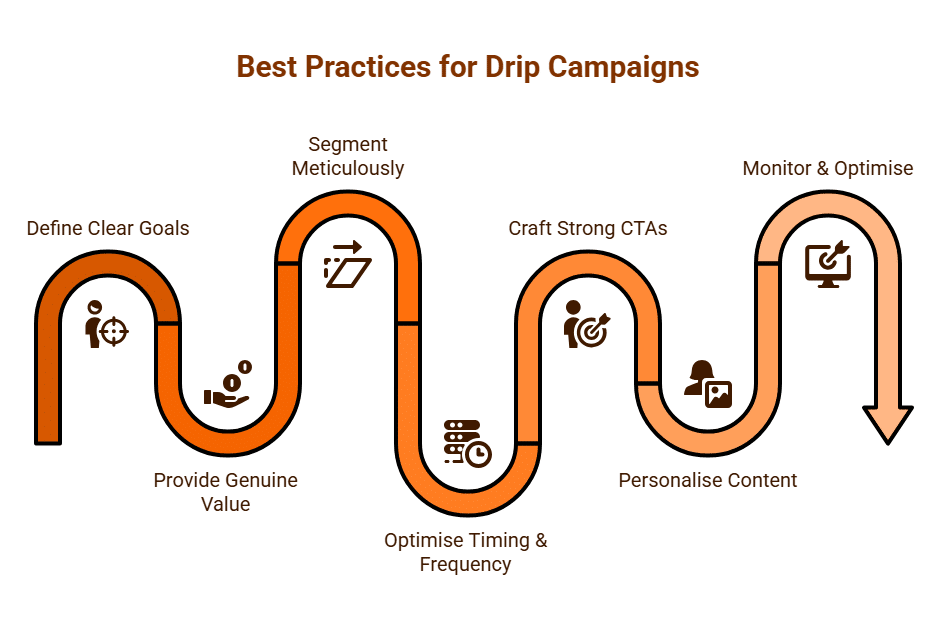
Best Practices for Successful Drip Campaigns
To maximise the impact of your drip campaigns, adhere to these best practices:
- Define Clear Goals: Every sequence and each email must have a singular, measurable objective.
- Provide Genuine Value: Each email should offer relevant, high-quality content that benefits the recipient.
- Segment Meticulously: Target specific audience segments with highly relevant sequences.
- Optimise Timing & Frequency: Test intervals to avoid fatigue; avoid overwhelming subscribers.
- Craft Strong Calls to Action (CTAs): Clearly guide recipients on the next desired step.
- Personalise Content: Utilise subscriber data to make messages feel individual and relevant.
- Monitor & Optimise: Regularly review performance (opens, clicks, conversions) and adjust based on the resulting data.
Driving Sustainable Customer Relationships
Drip feed email marketing stands as a potent, automated strategy for cultivating lasting customer relationships and driving conversions. By consistently delivering timely, relevant, and personalised content at crucial stages of the customer journey, businesses can effectively nurture prospects into loyal patrons and significantly maximise their customer lifetime.
What is the Average Expected Open Rate for EDMs by Industry Type?
The open rate is a fundamental metric in email marketing, measuring the percentage of email recipients who open a specific email. It is a critical indicator of a campaign’s success, reflecting the effectiveness of the subject line and the strength of the sender’s relationship with their audience. However, there is no single “good” open rate. What’s considered a strong performance can vary dramatically across different industries due to varying customer relationships, content types, and business models.
It’s important to view average open rates not as a rigid target but as a benchmark against which to measure your own performance and identify opportunities for improvement.
Average Open Rate Benchmarks by Industry
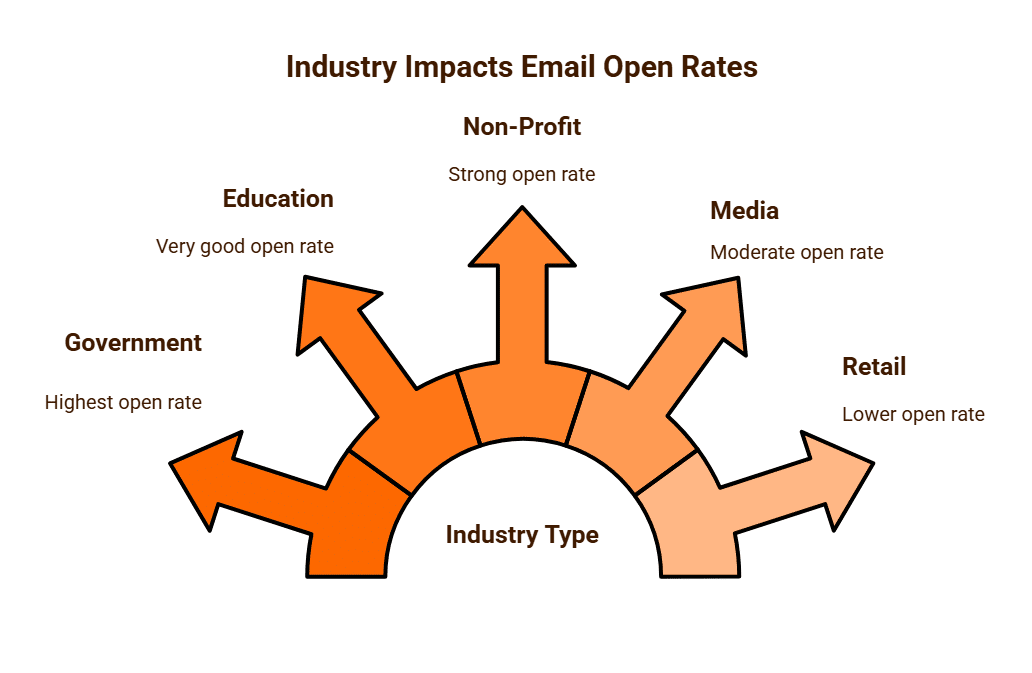
Based on aggregated data from leading email marketing platforms, here are some general benchmarks for average email open rates by industry. These figures represent a broad average and can fluctuate based on specific campaign variables, list quality, and audience segmentation.
- Government: Often leads the pack with some of the highest open rates, typically ranging from 28% to over 30%. This is likely due to the critical and official nature of the information being sent.
- Education: Tends to perform very well, with average open rates around 25%. Communication from educational institutions is often highly anticipated and relevant to students and parents.
- Non-Profit: Open rates for non-profits are strong, averaging between 20% and 25%. Donors and supporters are generally highly engaged and passionate about the organisation’s cause.
- Media and Publishing: This industry sees open rates in the 20% to 22% range. Subscribers are often keen to receive content updates, news, or articles from sources they trust.
- Consumer Services: A broad category that includes professional services, this industry typically sees open rates around 20% to 21%.
- Healthcare: Similar to government and education, healthcare communications are often important and expected, with open rates around 19% to 22%.
- Retail and E-commerce: This is a highly competitive sector, and open rates often fall in the 15% to 18% range. With a high volume of promotional emails, standing out in the inbox is a significant challenge.
- Travel and Hospitality: Open rates here are often slightly lower, around 15% to 17%, influenced by the seasonal nature of travel planning and extensive competition.
- Manufacturing: As a business-to-business (B2B) sector, open rates can be in the 16% to 19% range. The audience is often smaller and more specialised, which can sometimes lead to higher engagement.
- Real Estate: This industry typically sees open rates between 17% and 20%. People who sign up for real estate updates are often in a highly engaged, research-oriented mindset.
Factors Influencing Open Rates
While industry benchmarks provide a useful guide, several other factors can significantly impact your specific open rate:
- Subject Line: A compelling, personalised, and concise subject line is the single most important factor. It must create curiosity or offer a clear benefit.
- Sender Name: Recognition and trust are key. A sender name that is familiar and trustworthy (e.g., the company name or a recognisable person’s name) will have a higher open rate than an unknown one.
- List Quality: A clean, segmented, and permission-based email list will always outperform a large, untargeted list. Subscribers who have explicitly opted in are more likely to be engaged.
- Audience Segmentation: Sending highly relevant content to a segmented portion of your list (e.g., a specific product offer to customers who have previously purchased a similar item) will yield a much higher open rate than a mass email to your entire list.
- Time of Day/Week: The timing of your email delivery can also play a role, although this is becoming less critical as people access email across various devices throughout the day.

How to Improve Your Open Rate
- Refine Your Subject Lines: A/B test different subject lines to see what resonates with your audience. Use questions, urgency, emojis, and personalisation.
- Clean Your Email List: Regularly remove inactive subscribers who have not engaged with your emails over a prolonged period. This improves deliverability and gives you a more accurate open rate metric.
- Segment Your Audience: Divide your list based on demographics, interests, past purchases, or engagement level to send more targeted and relevant content.
- Use a Recognisable Sender Name: Ensure your sender name is instantly recognisable and builds trust.
- Optimise for Mobile: With most emails now opened on mobile devices, ensure your subject lines are short and readable on a small screen.
While a global average open rate provides a helpful benchmark, a truly successful email marketing strategy focuses on continuous improvement by optimising the key variables within your control. By focusing on subject line creativity, list quality, and audience relevance, you can significantly boost your open rates and drive greater success for your email campaigns.

How to Create Compelling Subject Lines for EDMs?
The subject line of an Electronic Direct Mail (EDM) campaign is the most critical element in determining whether your email gets opened or deleted. In a crowded inbox, it acts as the “gatekeeper,” and its sole purpose is to compel the recipient to take the first, most important action: clicking to open. Crafting a compelling subject line is both an art and a science, blending creativity with a strategic understanding of your audience.
Here are some key principles and best practices for creating subject lines that capture attention and drive open rates.
1. Create Urgency and Scarcity
Human nature is wired to respond to a sense of urgency. Subject lines that create a fear of missing out (FOMO) often perform exceptionally well.
- Urgency: Use time-sensitive language like “Last chance,” “24 hours only,” or “Ends tonight.”
- Scarcity: Imply that the offer or product is limited. Examples include “Only 5 left in stock” or “Exclusive offer for the first 50 customers.”
2. Personalise Your Message
A personalised subject line can make a recipient feel that the email was written specifically for them, significantly increasing the likelihood of an open.
- Use the Recipient’s Name: Simple personalisation like “John, an exclusive offer for you” or “A quick question for Sarah” can be highly effective.
- Leverage User Data: Go beyond just names. Segment your list and use data like past purchases, location, or browsing history to make the subject line ultra-relevant. For example, “Your recent purchase of running shoes has us thinking…”
3. Spark Curiosity and Intrigue
Intrigue is a powerful tool. A subject line that hints at an interesting story, asks a question, or withholds a key piece of information can make a user curious enough to click.
- Ask a Question: “Are you making this common marketing mistake?” or “Is your website ready for the future?”
- Be Mysterious: “The one thing you’re doing wrong” or “What we learned from our biggest failure.”
4. Focus on the Benefit
The recipient is always thinking, “What’s in it for me?” Your subject line should answer this question immediately. Focus on the value they will receive, not just the action you want them to take.
- Highlight a Solution: “Fix your slow website in just 5 minutes” or “The secret to better sleep.”
- Offer a Clear Benefit: “Get 20% off your next order” or “Free shipping on all products this week.”
5. Be Concise and Mobile-Friendly
With a majority of emails being opened on mobile devices, brevity is essential. Most mobile email clients display only the first 30-50 characters of a subject line.
- Keep it Short: Aim for subject lines between 6-8 words.
- Use Emojis Strategically: Emojis can add a visual element and help your email stand out in a crowded inbox, but use them sparingly and ensure they are relevant to your brand and message.
6. A/B Test Everything
The best way to know what resonates with your specific audience is to test it. A/B testing two different subject lines for the same email can provide invaluable data. Test different lengths, tones, and techniques to see what generates the highest open rates for your brand.
What to Avoid
- Spammy Keywords: Avoid words and phrases that are commonly associated with spam filters, such as “Free,” “Guaranteed,” “Limited Time Offer,” or excessive exclamation marks.
- Deceptive Subject Lines: Never use a subject line that is misleading or promises something the email doesn’t deliver. This will lead to a high unsubscribe rate and damage customer trust.
- All Caps: Using all caps can come across as aggressive and is often perceived as shouting.
By combining these strategies, you can transform your email subject lines from simple labels into powerful conversion tools that boost open rates and increase the overall effectiveness of your email marketing campaigns.

How to Segment a Database for Targeted EDMs?
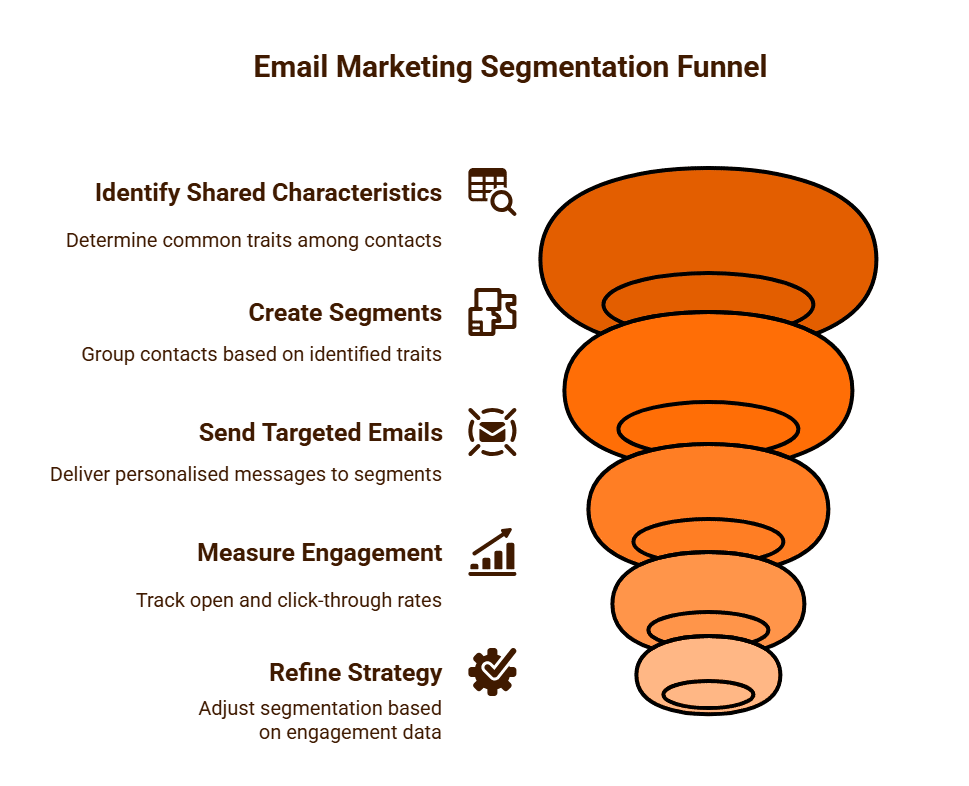
Database segmentation is the process of dividing your email list into smaller, more specific groups based on shared characteristics. When planning targeted Electronic Direct Mail (EDM) campaigns, this is a foundational strategy for moving away from generic, one-size-fits-all emails and towards highly targeted, personalised communication. The goal is to send the right message to the right person at the right time, thereby increasing relevance, engagement, and, ultimately, conversion rates.
Why Segmentation is Crucial for Effective Email Marketing
Sending a single mass email to an entire database is an outdated and inefficient practice. Segmentation is vital for a number of reasons:
- Improved Open and Click-Through Rates: When an email is highly relevant to a recipient’s interests or needs, they are far more likely to open it and click on its links. This boosts engagement metrics, which also signals to email service providers that your content is valuable, improving deliverability.
- Reduced Unsubscribe and Spam Complaint Rates: Irrelevant emails are a primary cause of unsubscribes and spam complaints. By sending targeted content, you respect the recipient’s inbox, maintaining a healthy and engaged list.
- Higher Conversion Rates: A segmented campaign speaks directly to a user’s specific context. A customer who has just purchased a product should receive a post-purchase follow-up, not a promotional offer for the item they just bought. This tailored approach makes conversions more likely.
- Enhanced Customer Relationships: Personalised communication builds trust and strengthens the relationship between your brand and your customers, which fosters long-term loyalty.
Common Segmentation Methods
The data you collect from your audience provides the criteria for effective segmentation. Here are some of the most common and powerful methods:
- Demographic Data: Segment your audience based on basic information such as age, gender, location, and language. This is particularly useful for businesses with products or services that appeal to specific demographics or for running location-specific promotions.
- Purchase History: This is a goldmine for e-commerce businesses. You can segment your database based on:
- Past Purchases: Target customers who have purchased a specific product with complementary items.
- Total Spend: Differentiate between your top spenders and one-time purchasers.
- Frequency of Purchase: Create campaigns to reward loyal customers or re-engage those who haven’t purchased in a while.
- Website Behaviour: Use data from your website analytics to understand user behaviour. You can segment lists based on:
- Abandoned Carts: Send a reminder email to a user who added items to their cart but didn’t complete the purchase.
- Page Views: Target users who have viewed a specific category or product page but haven’t bought anything.
- Time on Site: Identify your most engaged visitors and send them exclusive offers.
- Engagement Level: Segment your audience based on their past interaction with your emails.
- Active Subscribers: These are people who have opened or clicked on your emails recently. They should receive your most important campaigns.
- Inactive Subscribers: You can create a re-engagement campaign for subscribers who haven’t opened an email in months.
- Preference and Interest: Allow your subscribers to self-segment by asking them about their interests or preferences in a sign-up form or a preference centre. This gives them control over the content they receive, ensuring maximum relevance.
Implementing Segmentation
Most modern Email Service Providers (ESPs) make segmentation a straightforward process. Within the platform’s dashboard, you can create segments by setting up rules based on the data you have collected. For example, you can create a segment for “Customers who purchased in the last 90 days and live in Victoria, Australia.”
The key to successful segmentation is to start simple and then build complexity as you gather more data. You don’t need dozens of segments from day one. Start with one or two key segments that align with your business goals, and then continuously test, analyse, and refine your approach based on the performance data you collect. By making segmentation a core part of your email marketing strategy, you can transform your communications from generic noise into a valued, personalised conversation.
When Should You Use Customised Landing Pages for Email Lead Generation?
Using customised landing pages for email lead generation is a strategic approach that can significantly enhance conversion rates and improve the overall effectiveness of your marketing campaigns. Unlike sending traffic to a generic homepage, a dedicated landing page is purpose-built to address the specific needs and interests of a segmented audience, thereby creating a seamless and highly relevant user experience. This strategy should be employed whenever you have a clearly defined audience segment and a specific, valuable offer to present.
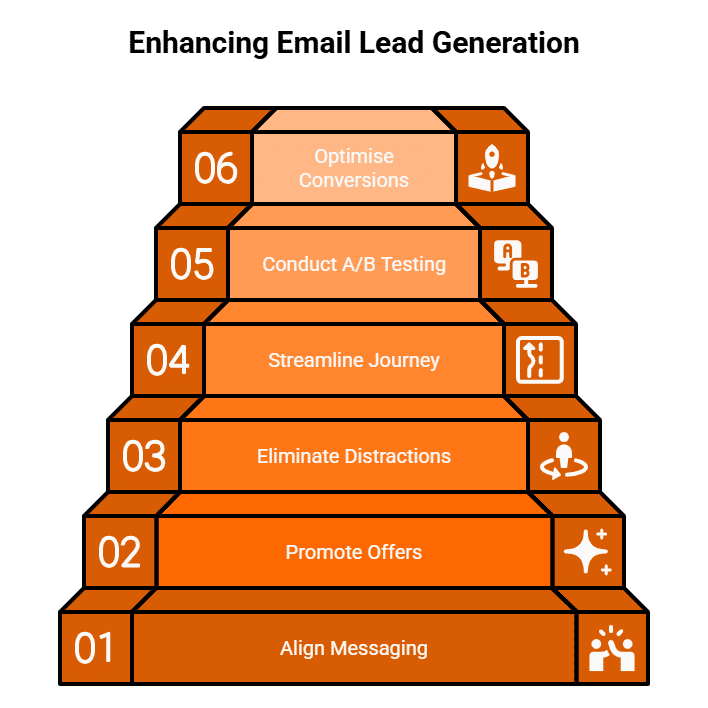
Aligning Messaging with Audience Segments
The primary reason to use a customised landing page is to create a direct message match between your email content and the landing page’s offer. When you segment your email list, you are dividing your audience based on specific characteristics, such as demographics, interests, or past behaviour. A customised landing page allows you to continue this conversation after the click.
For example, if you send an EDM to a segment of your database that has previously downloaded a guide on “sustainable gardening,” you should not send them to a landing page about “home décor.” Instead, a customised landing page titled “Your Next Step to a Sustainable Garden” that offers a free workshop or a list of exclusive, eco-friendly gardening products would be far more effective. This level of personalisation reassures the recipient that the content is tailored to them, increasing their trust and willingness to engage.
Promoting Specific Offers and Lead Magnets
Customised landing pages are indispensable when promoting specific offers or lead magnets. A lead magnet is a valuable resource—such as an e-book, a webinar, a cheat sheet, or a free trial—that you offer in exchange for a user’s contact information. By creating a dedicated landing page for each lead magnet, you can:
- Eliminate Distractions: A good landing page removes all unnecessary navigation, sidebars, and internal links. Every element on the page, from the headline to the form fields, is focused on a single conversion goal. This high attention ratio keeps the user focused on the offer, significantly reducing the likelihood of them “bouncing” or navigating away.
- Streamline the User Journey: The landing page provides a clear, logical next step after the email. The copy reinforces the value of the lead magnet, and the form makes it easy for the user to convert. This streamlined journey removes friction and increases conversion rates.
Conducting A/B Split Testing and Optimisation
Customised landing pages provide an excellent environment for A/B testing, which is a crucial aspect of conversion rate optimisation (CRO). A/B split testing allows you to test two different versions of a page to see which one performs better.
You can test various elements, including:
- Headlines and Subheadings: Does a question-based headline or a benefit-oriented headline perform better?
- Call-to-Action (CTA) Buttons: Does a different button colour, size, or text (“Download Now” vs. “Get My Free Guide”) increase conversions?
- Imagery and Visuals: Do stock images, custom graphics, or a product video yield a higher conversion rate?
- Form Length: Does a shorter form with fewer fields lead to more sign-ups?
By continuously testing and optimising, you can refine your landing pages to become highly efficient conversion machines. The data gathered from these tests can then inform your broader marketing strategies, ensuring that your messaging and visual assets are as effective as possible.
Customised landing pages are a powerful tool for email lead generation. They should be used whenever you want to deliver a highly relevant, distraction-free, and optimised experience for a specific audience. By aligning your messaging, promoting specific offers, and leveraging the power of A/B split testing, you can transform your email campaigns from a simple communication tool into a direct driver of valuable conversions.
How to Implement A/B Split Testing?
A/B split testing, also known as A/B testing or split testing, is a scientific method for comparing two versions of a webpage or app element to determine which one performs better. It is a cornerstone of Conversion Rate Optimisation (CRO) and allows businesses to make data-driven decisions that improve user experience and, ultimately, increase conversions. Implementing an A/B test is a methodical process that requires careful planning and analysis.
Step 1: Identify Your Goal and Hypothesis
The first and most crucial step is to define a clear goal for your test. What metric do you want to improve? This could be your conversion rate (e.g., a purchase, a sign-up, a lead form submission), your click-through rate (CTR), or even a softer metric like time on page.
Once your goal is set, you must form a hypothesis. This is a specific, testable statement about why you believe a change will lead to a better result.
- Example Hypothesis: “We believe that changing the colour of our ‘Add to Cart’ button from blue to red will increase our conversion rate because red is a more visually prominent colour, drawing more attention to the call to action.”
Step 2: Choose Your Variables
To ensure a clear and accurate result, you should only test one variable at a time. Testing multiple variables simultaneously makes it impossible to know which change was responsible for the performance difference.
Examples of single variables you can test include:
- The Call-to-Action (CTA) button: The text, colour, size, or placement of the button.
- Headlines and Subheadings: The wording or tone of your page’s main headline.
- Imagery: The primary product image, a banner image, or a background visual.
- Page Layout: The order of different sections or the location of a form.
- Product Descriptions: The length or tone of your product copy.
Step 3: Create the “B” Version
With your single variable chosen, you will create a second version of the page, known as the “B” version. The original page is the “A” version. The “B” version should be identical to the “A” version in every way, except for the single variable you are testing. Modern A/B testing tools make this easy, allowing you to make changes directly within their interface without creating a whole new page.
Step 4: Use a Testing Tool and Run the Experiment
You will need a dedicated A/B testing tool to run your experiment. Popular tools include Google Optimize (though it is being deprecated in favour of GA4’s native testing functionality), VWO, and Optimizely.
The tool will work by splitting your website traffic. For example, 50% of your visitors will be shown the “A” version, and the other 50% will see the “B” version. It is crucial to run your test for a sufficient period of time to gather enough data and reach statistical significance. This ensures that the results are not due to random chance. The duration of the test depends on your website traffic and conversion rate, but it is often recommended to run it for at least one to two weeks.
Step 5: Analyse the Results
After the test has run its course, the tool will provide a detailed report on the performance of both versions. It will show you the conversion rates, click-through rates, and other relevant metrics for each. The tool will also tell you which version is the “winner” and with what degree of statistical confidence. A result with 95% confidence, for example, means there is only a 5% chance that the winning version’s performance was due to chance.
Step 6: Implement the Winner
Once a clear and statistically significant winner has been identified, you should implement that version of the page permanently. It is also important to document your findings. What did you learn about your audience? Did the hypothesis hold true? This knowledge can inform future tests and your broader marketing strategy, creating a cycle of continuous improvement. A/B split testing removes the guesswork from marketing, replacing assumptions with hard data that leads to tangible business growth.

Using Mailchimp vs Klaviyo for Email Marketing (EDM's)?
Email marketing (EDM’s) still remains one of the most effective and high-return channels of digital marketing. The choice of platform, however, is a foundational decision that can significantly impact a business’s ability to engage its audience, drive sales, and scale its operations.
Among the leading contenders, Mailchimp and Klaviyo stand out for their distinct philosophies and target audiences. While both platforms are highly capable of managing email campaigns, they are built for different stages of business growth and serve different strategic objectives.
Core Philosophy and Target Audience
The fundamental difference between Mailchimp and Klaviyo lies in their core design and intended user.
- Mailchimp is a general-purpose, all-in-one marketing platform. Its brand identity is built around simplicity, user-friendliness, and a delightful, intuitive interface. It is designed to be accessible to everyone, from small businesses and freelancers to bloggers and non-profits. With its easy-to-use drag-and-drop editor and broad feature set, Mailchimp is the perfect starting point for anyone new to email marketing who needs to build a list, send newsletters, and run basic campaigns. Its strength is its breadth of features for a wide variety of users.
- Klaviyo is a specialist platform built almost exclusively for e-commerce. Its entire architecture is designed to integrate deeply with e-commerce platforms like Shopify, WooCommerce, and Magento. Klaviyo’s core value proposition is its ability to turn customer data into revenue. It is the platform of choice for growing and established e-commerce stores that want to leverage granular customer data for advanced segmentation and powerful, revenue-driven automation. Its strength is its depth of features for a very specific type of business.
Automation and Segmentation Capabilities
This is where the starkest contrast between the two platforms emerges, and it is often the deciding factor for businesses.
- Mailchimp offers a robust set of automation features that are effective for standard campaigns. You can create welcome email series for new subscribers, abandoned cart reminders, and transactional emails. The segmentation tools are based on lists, tags, and basic demographic data. While effective, the automation is often rule-based and less dynamic than what Klaviyo offers, making it suitable for simple campaigns that don’t require deep personalisation.
- Klaviyo is a leader in data-driven segmentation and powerful automation. By connecting directly to your e-commerce store, it pulls in real-time transactional data, including purchase history, viewed products, and browsing behaviour. This allows you to build highly complex and personalised “Flows” (Klaviyo’s term for automation). For example, you could create a flow to send a special offer to customers who have purchased a specific product but haven’t bought anything in 90 days. Its visual “Flows” builder is a powerful tool for creating intricate, multi-step customer journeys that are triggered by a wide range of user actions.
Pricing Models
The pricing models of each platform reflect their target audiences.
- Mailchimp’s pricing is based on the number of contacts in your database. It offers a free plan for up to 500 contacts, which makes it an excellent, no-cost entry point for new businesses. As your list grows, you move up to paid tiers with more features. The cost scales linearly with your contact list size.
- Klaviyo’s pricing is also based on the number of contacts and the number of SMS messages sent. It has a free plan for up to 250 contacts, which is more restrictive. However, its pricing is often justified by the increased revenue it helps to generate. As your business grows, Klaviyo’s cost can scale significantly, but so too can the return on that investment.
Integrations and Ecosystem
- Mailchimp has a vast ecosystem of integrations with thousands of apps and services, including e-commerce platforms, social media tools, and CRMs. Its integrations are broad and designed for general purpose use.
- Klaviyo’s integrations are deep and purpose-built for e-commerce. It has seamless, real-time integrations with major platforms like Shopify, WooCommerce, and Magento, allowing it to pull in granular transactional data that other platforms cannot.
Reporting and Analytics
- Mailchimp provides clear, high-level reports on email performance, including open rates, click-through rates, and unsubscribes.
- Klaviyo excels in reporting and analytics, offering advanced dashboards that directly tie email campaigns to revenue, conversion rates, and customer lifetime value. It provides a real-time, unified view of your e-commerce performance.
The choice between Mailchimp and Klaviyo is a strategic one, based on your business’s current needs and future growth plans. Mailchimp is the ideal choice for new businesses, bloggers, and anyone who needs a simple, user-friendly, and affordable platform to get started with email marketing. It is a fantastic tool for sending newsletters and running basic campaigns.
Klaviyo, on the other hand, is the clear winner for growing e-commerce businesses that have a focus on data-driven growth. It is the platform that will allow you to leverage your customer data for powerful automation, advanced segmentation, and a direct impact on your bottom line.

How to Setup Abandoned Cart Email Reminders for E-Commerce Sites?
How to Set Up Abandoned Cart Email Reminders for E-Commerce Sites
Abandoned cart recovery is arguably the most valuable automation tactic in e-commerce email marketing. It is a targeted, high return strategy focused on recapturing sales lost at the final stage of the buying process. The average cart abandonment rate across all industries sits at around 70 per cent, making effective cart recovery essential for profitability. Setting up this powerful workflow requires a blend of technical integration, psychological strategy, and meticulous timing.
Phase 1: Technical Prerequisites and Integration
A successful abandoned cart sequence begins with seamless technical connectivity between your store and your email platform.
Firstly, you require a specialised Email Service Provider (ESP) such as Klaviyo, ActiveCampaign, or a dedicated Shopify Email service. These platforms are built specifically to handle the complex, data driven automation required for e-commerce.
The ESP must have deep, native integration with your shopping platform (e.g., Shopify, WooCommerce, Magento). This connection is crucial as it allows the ESP to track two non-negotiable events in real time: “Added to Cart” and, most importantly, “Order Placed.”
The system must be able to capture the user’s email address early in the checkout process. This is typically achieved when a user enters their email address on the first checkout screen or if they are a returning, logged in customer.
The recovery sequence is then triggered when a user adds items to their cart, begins checkout, and then leaves the site without completing the transaction for a defined period. A robust integration also includes vital exclusion logic, ensuring the automated sequence immediately stops if the customer returns and completes the purchase.
Phase 2: The Strategic Three Email Sequence
Best practice dictates using a strategic sequence of three emails, spaced to maximise recovery without causing irritation or spam complaints. The content and tone of each email are tailored to address a different psychological barrier.
Email 1: The Soft Nudge (1 to 4 hours after abandonment)
The first email should be sent shortly after abandonment, ideally within four hours. The tone should be gentle, assuming the customer was merely distracted or experienced a minor technical issue.
- Objective: Immediate reminder and recovery.
- Content: Simple, clear language. Display the exact product image, name, and price the customer left behind. The primary Call to Action (CTA) must link directly back to the active shopping cart or checkout page.
- Subject Line: Focus on helpfulness, such as “Did something go wrong?” or “You left something behind!”
Email 2: The Value Reinforcement (18 to 24 hours after abandonment)
The second email reinforces the value of the product and addresses common objections such as product quality or delivery concerns.
- Objective: Overcome hesitation and build trust.
- Content: Reiterate key product benefits. Introduce social proof by including a short testimonial or star rating associated with the abandoned product. Crucially, remind the customer of free shipping thresholds, hassle free returns, and clear customer service contact details.
- Subject Line: Focus on benefits, such as “Don’t miss out on [Product Name]” or “Still deciding? See why others love this.”
Email 3: The Incentive (2 to 3 days after abandonment)
The final email is the last attempt to prompt a sale and should be used to provide a final, time limited incentive.
- Objective: Create urgency and overcome the final price objection.
- Content: Introduce a small, high value incentive, such as a ten per cent discount code or free express shipping. The incentive must have a clear expiration date to prompt immediate action. The design should be bold with a clear sense of urgency.
- Subject Line: Focus on urgency and the discount, such as “Your 10% offer expires tonight!” or “A special gift just for you.”
Best Practices for Maximising Conversions
To ensure high conversion rates and protect brand integrity, several rules must be followed rigorously:
- Deep Personalisation: Use the customer’s name, their saved cart items, and tailored dynamic content in every email.
- Frictionless Checkout: The CTA button must link directly to a mobile optimised checkout page that requires minimal clicks and information entry to complete the purchase.
- Trust and Transparency: Clearly display the total price, including any applicable shipping costs, within the email or on the immediate landing page to avoid unwelcome surprises.
- Exclusion Logic: Never send a recovery email to a customer who has already placed an order. This is vital for maintaining a professional brand image.
A meticulously executed abandoned cart strategy is not merely a technical setup; it is a behavioural marketing effort that consistently proves to be one of the highest returning channels, actively recapturing revenue that was otherwise lost.
How to Create an Email List for Your Business?
When considering marketing your business with digital marketing, where social media algorithms shift constantly and paid advertising costs fluctuate wildly, one asset remains consistently valuable: the email list.
This direct communication channel offers an unparalleled opportunity to nurture leads, build brand loyalty, and drive conversions without reliance on third-party platforms. Creating and growing a high quality email list is a foundational activity for any successful business, requiring a strategic approach that effectively harnesses both organic and paid traffic.
The Foundation: Your Lead Magnet and Technology
Before driving traffic, you must have a compelling reason for visitors to hand over their contact details. This is your lead magnet; a valuable piece of content offered in exchange for an email address.
| Content Type | Best for | Examples |
| Educational | B2B, Service, Complex Products | E-books, detailed guides, white papers, case studies. |
| Utility | E-commerce, Tools, Software | Checklists, templates, free calculators, curated resource lists. |
| Incentive | Retail, Consumer Goods | Exclusive discount codes (e.g., 15% off first order), early access to sales, free shipping. |
A well crafted lead magnet addresses a specific pain point and offers immediate, tangible value.
Next, you’ll need the right technology:
- Email Service Provider (ESP): Platforms like Klaviyo, Mailchimp, or Brevo (formerly Sendinblue) are essential for managing subscribers, segmenting your list, and setting up automated communication flows (e.g., welcome series, abandoned cart reminders).
- Opt-in Forms: Use tools (often integrated with your ESP or CMS like Shopify/WordPress) to create various forms:
- Pop-ups: High converting but must be implemented sensitively (e.g., exit intent or time delayed).
- Embedded Forms: Placed in the footer, sidebar, or dedicated landing pages.
- Landing Pages: Dedicated, distraction free pages used for high value paid traffic.
Phase 1: Building Your List Through Organic Traffic
Organic list building relies on capturing visitors who arrive naturally through Search Engine Optimisation (SEO), social sharing, and direct navigation. This method yields highly qualified, lower cost leads.
Content and SEO Strategy
Your content must funnel users toward your lead magnet.
- Content Upgrades: Integrate lead magnets directly into your highest-performing blog posts. If a post is about “The 10 Best Tools for SEO,” offer a “Free SEO Audit Offer” as a content upgrade within that article. This ensures contextual relevance and maximises conversion rates.
- Top-to-Middle Funnel Alignment: Use your most popular content (e.g., a “Beginner’s Guide to Digital Marketing”) to offer a corresponding lead magnet (e.g., a “Marketing Terminology Glossary”). The content attracts the interest, and the magnet captures the details.
- Website Banners and Footers: Ensure your sitewide offer (usually the incentive-based magnet, like a first-time discount) is prominently displayed on high-traffic pages, such as the homepage and category pages, using a fixed banner or a clear footer sign-up form.
Social Media and Community Engagement
- Link in Bio: Utilise tools like Linktree or Shopify’s own Linkpop to dedicate a primary link on Instagram and TikTok to your best lead magnet or sign-up page.
- Facebook/LinkedIn Groups: Actively provide value in relevant community groups. When appropriate, offer your lead magnet (e.g., a free template) as a solution to a stated problem, always checking group rules regarding self promotion.
- Lead Generation Quizzes: Embed short, entertaining, or diagnostic quizzes on your site (or link from social media) that require an email to receive the results. This offers value in a highly engaging, interactive format.
Phase 2: Accelerating Growth with Paid Traffic
Paid traffic allows you to scale your list quickly and target specific, desirable segments. While there is a cost-per-lead (CPL), the speed and precision of targeting can justify the expense.
Targeted Lead Generation Campaigns
- Facebook and Instagram Lead Ads: These are highly effective because they allow users to sign up without leaving the social platform. The form automatically pre-fills with the user’s details, significantly reducing friction. Use compelling visuals and copy that explicitly highlight the value of the lead magnet.
- Google Ads (Search and Display):
- Search: Target users searching for problems your lead magnet solves (e.g., search for “budgeting template” leads to an ad for your free “Small Business Budget Template”). Use dedicated landing pages with no navigation to maximise focus.
- Display: Use visually rich banners placed on relevant third-party sites to promote a free, high value asset like an e-book or report.
Budget and Cost Considerations
- Determine Your Maximum CPL: Based on the lifetime value (LTV) of a customer, calculate the maximum amount you can profitably pay for a new lead. For a business with a strong conversion funnel, a higher CPL may be acceptable.
- A/B Test Everything: Continuously test ad copy, targeting demographics, and, most importantly, the lead magnet itself. A 10% improvement in CPL can save thousands of pounds over the course of a campaign.
- Retargeting: Use paid campaigns to retarget visitors who viewed your lead magnet landing page but did not sign up. This warm audience is far more likely to convert than cold traffic and typically has a lower CPL.
- Explicit Consent: Always use clear, unchecked boxes for subscription consent. Users must actively opt-in to receive emails. Do not automatically subscribe them simply because they downloaded the lead magnet. Using verification emails are perfect for creating actual users who care about your service or product, which requires an additional click from a follow-up verification email.
- Transparency: Clearly state what subscribers will receive and how often. Ensure a visible and easy-to-use unsubscribe link is included in every email.
- List Hygiene: Regularly clean your list to remove inactive or bouncing email addresses. This maintains your sender reputation and improves email deliverability, ensuring your valuable messages reach the inbox.
By strategically weaving together the long term value of organic, content driven lead capture with the immediate scale and precision of paid advertising, any business can master the creation of an email list, the most reliable digital asset in the modern marketing toolkit.
What is an Email Service Provider (ESP)?
When considering all forms of digital marketing, email still remains an indispensable tool for businesses of all sizes. From nurturing leads and announcing new products to providing customer support and building brand loyalty, email marketing offers a direct, powerful, and often highly cost effective channel.
However, managing email campaigns manually for a growing audience quickly becomes an insurmountable task. This is where an Email Service Provider (ESP) steps in acting as the sophisticated digital mailroom that enables businesses to communicate effectively at scale.
What is an Email Service Provider (ESP)?
An Email Service Provider (ESP) is a software company that offers a platform for sending and managing email marketing campaigns. Essentially, it’s a third-party service that allows businesses to create, send, track, and automate email campaigns without having to build their own email infrastructure.
Think of it this way; sending a few emails to friends is easy. Sending thousands, or even millions, of personalised emails to customers, ensuring they land in the inbox (not spam), tracking who opened them, who clicked links, and managing subscriptions and unsubscribes, that’s a job for an ESP.
Core Functions and Features of an ESP
Modern ESPs offer a comprehensive suite of tools designed to streamline every aspect of email marketing:
- Email Creation & Design:
- Drag-and-Drop Editors: User-friendly interfaces that allow you to design professional looking emails without needing coding knowledge. You can customise templates, add images, text blocks, buttons, and social media links.
- Template Libraries: A vast selection of predesigned templates for various purposes (promotional, transactional, newsletters, announcements) that are often mobile responsive.
- HTML Editor: For advanced users who want full control over their email’s code.
- List Management:
- Contact Management: Storing and organising your subscriber data, including names, email addresses, demographics, purchase history, and other custom fields.
- Segmentation: The ability to divide your main email list into smaller, more targeted groups based on specific criteria (e.g., location, past purchases, engagement level, demographics). This allows for highly personalised messaging.
- Sign-up Forms: Tools to create and embed customisable subscription forms on your website, social media, or dedicated landing pages.
- Unsubscribe Management: Automatically handling unsubscribe requests in compliance with regulations like GDPR and CAN-SPAM.
- Campaign Sending & Automation:
- Scheduled Sending: Plan campaigns to be sent at specific dates and times.
- A/B Testing: Test different subject lines, content, or calls-to-action to see which performs best.
- Automation Workflows (Drip Campaigns): Set up automated sequences of emails that trigger based on specific user actions or time delays (e.g., welcome series for new subscribers, abandoned cart reminders, birthday greetings, post-purchase follow-ups).
- Deliverability Tools: Features designed to improve the likelihood of your emails reaching the inbox, including spam testing, authentication protocols (SPF, DKIM, DMARC), and reputation monitoring.
- Reporting & Analytics:
- Open Rate: The percentage of recipients who opened your email.
- Click-Through Rate (CTR): The percentage of recipients who clicked on a link within your email.
- Conversion Rate: (If integrated with e-commerce platforms) The percentage of recipients who completed a desired action (e.g., purchase) after clicking from the email.
- Bounce Rate: The percentage of emails that failed to be delivered.
- Unsubscribe Rate: The percentage of recipients who opted out.
- Geographic Data: Where your subscribers are located.
These metrics provide vital insights into campaign performance, allowing for continuous optimisation.
Why Do Australian Businesses Need an ESP?
For businesses operating in the Australia, an ESP is not just a convenience; it’s a strategic necessity:
- Deliverability: Ensuring emails reach the inbox rather than the spam folder is critical. ESPs have established relationships with Internet Service Providers (ISPs) and implement best practices to maintain high deliverability rates.
- Scalability: As your business grows, an ESP can handle increasing subscriber numbers and email volumes without manual effort.
- Personalisation: In a competitive market, generic emails are ignored. ESPs enable segmentation and dynamic content to create highly relevant, personalised experiences that resonate with individual customers.
- Time & Resource Saving: Automating email workflows frees up valuable time for marketing teams to focus on strategy rather than manual sending.
Popular ESP Examples in the Aussie Market
The market for ESPs is diverse, with solutions catering to different business sizes and needs:
- Mailchimp:
- Pros: Highly popular for small businesses, extremely user friendly interface, robust free plan (up to a certain number of subscribers/emails), good for beginners.
- Cons: Can become more expensive as lists grow, advanced automation features may be limited compared to more specialised platforms.
- Klaviyo:
- Pros: Specialises in e-commerce, offering deep integrations with platforms like Shopify and WooCommerce. Unparalleled segmentation capabilities based on purchase data, sophisticated automation flows, and strong ROI tracking.
- Cons: Steeper learning curve, typically more expensive than Mailchimp, best suited for established e-commerce businesses.
- ActiveCampaign:
- Pros: Powerful marketing automation for both B2B and B2C, combining email marketing with CRM functionalities. Excellent for complex sales funnels and lead nurturing.
- Cons: Can be overwhelming for complete beginners due to its vast feature set, pricing scales with contacts.
- Brevo (formerly Sendinblue):
- Pros: Offers a comprehensive suite beyond just email, including SMS, chat, and CRM. Very competitive pricing, even offering a generous free tier. Excellent for businesses needing an all-in-one communication platform.
- Cons: Interface might feel less polished than some competitors for purely email focused users.
- GetResponse:
- Pros: Known for its user-friendly interface, strong webinar functionality, and landing page builder integrated with email marketing. Good for content creators and businesses looking to combine lead generation with email.
- Cons: Some advanced features might require higher tier plans.
Choosing the right ESP depends on your business size, budget, technical expertise, and specific marketing goals. However, the decision to use one at all is a fundamental step towards effective, scalable, and compliant digital communication.
Which Is More Effective: Email Campaigns or Newsletters?
Email marketing remains one of the most powerful digital tools for engaging customers, nurturing leads, and driving sales. However, within this broad category, two formats dominate: email campaigns and newsletters. Both use the same channel, yet they serve distinct purposes and achieve different results. For marketers aiming to refine their strategy, understanding the differences between these two approaches and knowing when to use each is essential.
So, which is more effective: email campaigns or newsletters? The answer largely depends on your goals, audience, and the metrics by which success is measured.
Understanding the Difference
Although the terms are sometimes used interchangeably, there are fundamental distinctions between an email campaign and a newsletter.
An email campaign is typically a targeted, goal-driven communication designed to achieve a specific outcome such as promoting a new product, announcing a sale, or driving sign-ups for an event. Campaigns are often part of a broader marketing funnel and tend to be time sensitive, persuasive, and conversion oriented.
A newsletter, on the other hand, is a recurring communication designed to inform, educate, or entertain. It might include company updates, industry insights, blog summaries, or curated content. Rather than focusing on immediate sales, newsletters build ongoing relationships, nurture trust, and keep audiences engaged over the long term.
In essence:
- Email campaigns are transactional.
- Newsletters are relational.
The Case for Email Campaigns
1. Direct Impact and Measurable Results
Email campaigns excel when the objective is to generate quick, measurable outcomes. Whether it’s a flash sale, seasonal promotion, or limited-time offer, campaigns are crafted with urgency in mind. Their messaging is clear, concise, and supported by strong calls to action (CTAs).
Because the purpose is so specific, success is easy to quantify. Marketers can track open rates, click-through rates, and conversion data to gauge performance in real time. This data-driven clarity allows for quick optimisation and improved return on investment (ROI).
2. Personalisation and Segmentation
Modern email platforms enable precise audience segmentation and automation. With tools like Mailchimp, HubSpot, or Klaviyo, businesses can send tailored messages based on user behaviour, purchase history, or demographics. For instance, an e-commerce store might send an abandoned-cart reminder, while a SaaS provider might trigger an onboarding sequence for new users.
This personalisation increases relevance, reduces unsubscribe rates, and often leads to higher conversion rates compared to more generalised communications.
3. Short-Term Sales Driver
If your business goal is to boost revenue quickly, email campaigns are ideal. They create immediate engagement by appealing to emotion, scarcity, or timing. For example, a subject line like “Ends Midnight: 20% Off Sitewide” compels readers to act promptly. When executed well, campaigns can generate impressive spikes in website traffic and sales within a short timeframe.
The Case for Newsletters
1. Long-Term Relationship Building
While email campaigns focus on conversion, newsletters focus on connection. A well-crafted newsletter helps establish your brand as a trusted source of information, fostering credibility and familiarity. Over time, subscribers come to anticipate your content, which strengthens loyalty and keeps your business top of mind even when they are not actively buying.
For B2B companies, thought leadership newsletters are particularly valuable. They position your brand as an authority within the industry, which can influence decision makers over the long term.
2. Higher Engagement and Lower Unsubscribe Rates
Newsletters typically enjoy steadier engagement over time because they provide consistent value without always asking for something in return. They nurture readers through storytelling, education, and insight rather than direct sales pressure.
Subscribers who stay engaged with a newsletter over months or years are more likely to convert when presented with an offer later, simply because they already trust the brand.
3. Versatility and Brand Voice
Newsletters also provide greater creative freedom. They can include product updates, blog features, customer stories, and expert tips all within one send. This variety helps maintain reader interest and showcases your brand’s personality in a way that short, transactional emails cannot.
Moreover, newsletters are ideal for brands that prioritise community and content marketing, such as educational institutions, professional services, or lifestyle brands. They allow for a softer, more conversational approach to engagement.
Comparing Performance Metrics
Effectiveness can be measured in several ways, depending on your goals:
| Metric | Email Campaigns | Newsletters |
| Primary Goal | Drive immediate conversions | Build trust and loyalty |
| Open Rate | Typically lower due to promotional tone | Generally higher due to recurring engagement |
| Click-Through Rate (CTR) | Higher when offers are clear and time-limited | Moderate but consistent over time |
| Conversion Rate | Short-term, measurable ROI | Long-term brand influence |
| Unsubscribe Rate | Can be higher if overused | Usually lower if content is valuable |
Ultimately, campaigns deliver quick wins, while newsletters deliver sustainable growth. Both play crucial roles at different stages of the customer journey.
Finding the Right Balance
The most effective strategy is rarely one or the other it’s a combination of both. Successful brands use newsletters to maintain regular contact and reinforce brand authority, while strategically deploying email campaigns to capitalise on specific opportunities.
For example, a retailer might send a weekly newsletter featuring styling advice, followed by a campaign promoting a limited-time sale. Likewise, a consultancy might use a monthly insights newsletter to nurture leads, complemented by targeted campaigns inviting readers to book a consultation or attend a webinar.
When integrated thoughtfully, newsletters build the relationship and campaigns monetise it.
Utilise Both
Determining whether email campaigns or newsletters are more effective depends entirely on context. If you’re seeking immediate conversions, email campaigns are the sharper tool. If your goal is to sustain long-term engagement and trust, newsletters are the stronger foundation.
In truth, both are indispensable. Newsletters cultivate relationships; campaigns capitalise on them. Together, they form a complete and balanced email marketing strategy one that not only drives results today but builds loyalty for tomorrow.
Which Is Better for Digital Marketing - SMS or Email?
Digital marketing continues to evolve, yet two of the oldest communication channels remain among the most powerful: SMS and email. Both are direct, measurable, and cost-effective tools for reaching customers at scale. However, each offers distinct advantages, challenges, and use cases.
The question of which is better SMS or email doesn’t have a simple answer. The most effective approach depends on your business goals, audience preferences, and how well each channel integrates within your overall marketing strategy. Let’s examine both in detail:
Understanding the Core Difference
Although both SMS and email marketing aim to communicate directly with customers, their formats and user expectations are quite different.
SMS (Short Message Service) delivers short, immediate messages directly to a recipient’s mobile device. It’s concise by nature usually under 160 characters and typically used for alerts, promotions, or time-sensitive information.
Email marketing, on the other hand, allows for more detailed communication. It can include images, long-form content, and links, making it ideal for newsletters, product announcements, and storytelling. While SMS is immediate, email is more flexible and better suited for brand nurturing.
The Case for SMS Marketing
1. Immediacy and High Engagement
One of SMS’s greatest strengths is its near-instant open rate. Studies suggest that over 90 per cent of text messages are read within three minutes of receipt. Unlike emails, which can sit unopened in crowded inboxes, text messages reach customers directly on their personal devices and trigger instant attention.
This immediacy makes SMS ideal for flash sales, appointment reminders, delivery updates, or urgent alerts. For businesses that rely on quick decisions such as retail, hospitality, or healthcare; SMS provides an unbeatable response time.
2. Unmatched Open and Click-Through Rates
Open rates for SMS regularly exceed 95 per cent, compared with an average of 20-30 per cent for email. Click-through and engagement rates are also significantly higher. Because mobile users tend to have notifications enabled, it’s almost impossible to ignore an incoming text.
These numbers make SMS particularly effective for short-term campaigns or re-engaging inactive customers who may have stopped responding to emails.
3. Personalisation and Two-Way Interaction
Modern SMS platforms allow for personalised messages using customer names, purchase history, or geographic location. Additionally, SMS campaigns can be interactive customers can reply directly to confirm appointments, vote, or redeem offers.
That two-way communication creates a sense of immediacy and personal connection that’s hard to replicate with email.
4. Limitations of SMS
Despite its strengths, SMS has some notable constraints. The message length is limited, making it unsuitable for detailed content or rich media. It also requires explicit consent and compliance with privacy laws such as the GDPR and the UK Privacy and Electronic Communications Regulations (PECR).
Furthermore, frequent SMS messages can be perceived as intrusive, leading to unsubscribes or negative brand associations. Costs per message can also add up quickly for large audiences, making email a more economical option for long-term engagement.
The Case for Email Marketing
1. Cost-Effectiveness and Scalability
Email remains one of the most cost-effective digital marketing channels available. Once your database and templates are in place, you can reach thousands, or even millions, of customers for minimal ongoing expense. There are no per-message charges, and automation tools allow for sophisticated segmentation and scheduling.
This makes email ideal for content-driven strategies, nurturing leads through funnels, and maintaining consistent communication without substantial ongoing costs.
2. Design and Content Flexibility
Email’s ability to include visual elements, links, and long-form copy gives marketers far greater creative freedom. You can tell stories, showcase products, or deliver educational content in ways that SMS simply cannot.
Well-designed emails can reinforce brand identity, build authority, and strengthen customer relationships over time. They also integrate easily with CRM systems, analytics, and automation workflows.
3. Analytics and Measurable Insights
Email marketing platforms provide extensive metrics open rates, click-through rates, conversions, heat maps, and more. This detailed data enables continuous optimisation and A/B testing. SMS metrics, by comparison, are far more limited, offering little insight beyond delivery and click data.
4. Limitations of Email
The primary challenge for email is competition for attention. Inboxes are flooded daily, and even the best-crafted messages can be overlooked or filtered into junk folders. Engagement rates have declined over time as consumers become more selective.
Email also lacks immediacy recipients might read it hours or even days later. For urgent communication, SMS still has the upper hand.
When to Use Each Channel
Rather than choosing one over the other, the most effective digital marketers combine both channels strategically.
| Situation | Best Channel |
| Time-sensitive promotions | SMS |
| Long-form storytelling or newsletters | |
| Appointment reminders | SMS |
| Product launches or updates | |
| Customer feedback surveys | SMS or Email (depending on length) |
| Post-purchase follow-ups | Email with optional SMS confirmation |
For example, a retailer might use email to announce a new collection and follow up with an SMS reminder on launch day. A service business might send appointment confirmations via SMS and satisfaction surveys by email afterward.
By understanding when each channel performs best, brands can maximise engagement and minimise fatigue.
The Verdict
When comparing SMS and email marketing, it’s not a matter of which is universally better—it’s about which is better for a specific purpose.
- SMS offers speed, visibility, and immediacy, making it perfect for short, high-impact campaigns.
- Email offers depth, flexibility, and scalability, making it essential for brand storytelling and long-term nurturing.
The most successful marketers integrate both channels using SMS for urgency and reach, and email for engagement and loyalty. In doing so, they create a holistic communication strategy that meets customers where they are, on their terms, and in their preferred format.
